Food Processing & Sanitation Compliance
Cleaning standards for food processing facilities require more than making equipment and floors look clean. FDA-regulated plants must maintain sanitary buildings and equipment, clean food-contact surfaces as often as necessary to prevent contamination and allergen cross-contact, use safe cleaning and sanitizing chemicals, and implement written sanitation controls when sanitation is needed to control a food-safety hazard. USDA-inspected meat, poultry, and egg-product establishments follow additional Sanitation SOP requirements. There is no single cleaning frequency, sanitizer concentration, or checklist that applies to every food plant.
That last point is important.
A dry bakery, a ready-to-eat packaging room, a beverage plant, and a raw-meat processing line can all be “food processing facilities,” but they do not have identical sanitation risks.
A strong program therefore starts with the product, process, hazards, equipment, allergens, regulatory jurisdiction, and production schedule rather than copying a generic janitorial checklist.

Which Cleaning Standards Apply to Food Processing Facilities?
The answer depends partly on which regulator and food-safety framework applies to the product.
| Facility or Activity | Main Sanitation Framework | What It Means for Cleaning |
|---|---|---|
| Many FDA-regulated food manufacturers and processors | 21 CFR Part 117 | Current Good Manufacturing Practice requirements plus preventive controls where applicable, including sanitation controls when needed to control identified hazards. |
| USDA-FSIS inspected meat and poultry establishments | 9 CFR Part 416 | Sanitation performance standards plus written Sanitation Standard Operating Procedures, or Sanitation SOPs. |
| Certain egg-product operations | USDA-FSIS requirements | Sanitation procedures depend on the operation, equipment, process, and applicable FSIS requirements. |
| Seafood processors | FDA seafood HACCP requirements plus applicable sanitation rules | Sanitation is integrated with the processor’s product-specific HACCP and prerequisite programs. |
| Juice processors | FDA juice HACCP requirements plus applicable sanitation rules | Cleaning must support the facility’s process controls, sanitation program, and HACCP system. |
| Restaurant or retail food kitchen | State/local retail food rules and applicable Food Code provisions | This is a different intent from industrial food processing and should not be treated as the same regulatory program. |
In other words, there is no federal regulation literally titled “the food processing facility cleaning standard.”
Instead, sanitation obligations are built into cGMPs, preventive controls, Sanitation SOPs, HACCP systems, product-specific regulations, chemical labels, and state requirements.
The practical takeaway: identify the regulatory framework before building the cleaning schedule. A procedure copied from a restaurant kitchen can be inadequate for a food manufacturing line, while a wet-wash procedure copied from a meat plant can create problems inside a low-moisture operation.
If your question is specifically about restaurant kitchens rather than manufacturing or processing plants, use the separate guide on how to clean a restaurant kitchen to health code .
How Clean Must Food-Contact Surfaces Be?
FDA’s current cGMP rule requires food-contact surfaces, including utensils and equipment surfaces, to be cleaned as frequently as necessary to protect food against contamination and allergen cross-contact.
In wet processing, food-contact surfaces must be cleaned and sanitized before use when necessary to prevent allergen cross-contact or the introduction of microorganisms.
They must also be cleaned and sanitized after interruptions during which the surface may have become contaminated.
During continuous production, equipment and utensils still have to be cleaned and sanitized as necessary.
“Looks Clean” Is Not the Same as “Sanitation Control Is Effective”
Visual inspection is useful.
It can reveal food residue, grease, powder, standing water, damaged surfaces, product buildup, or missed cleaning areas.
But a surface can look polished and still present a microbiological or allergen risk.
That is why food-processing sanitation programs may use several verification methods rather than relying on appearance alone.
Depending on the plant and hazard analysis, verification can include:
- Pre-operational visual inspection
- Sanitizer concentration checks
- ATP or other rapid hygiene testing
- Protein or allergen residue testing
- Environmental microbiological sampling
- Finished-product testing where appropriate
- Trend review of repeated sanitation failures
Do not overstate ATP results. ATP testing can help verify removal of biological residue and improve sanitation consistency, but a passing ATP reading does not by itself prove that a food-contact surface is free of every pathogen or allergen.
How Often Must Food Processing Equipment Be Cleaned?
There is no universal federal rule requiring every food-processing surface to be cleaned every four hours.
That four-hour concept is commonly associated with certain continuous-use food-contact surfaces under retail Food Code rules.
FDA food-manufacturing cGMPs instead require food-contact surfaces to be cleaned as frequently as necessary to protect against contamination and allergen cross-contact.
The appropriate frequency can therefore be:
- Before production starts
- Between products
- Between allergen profiles
- After an unplanned contamination event
- After maintenance
- At defined production breaks
- At the end of a production run
- Daily
- Less frequently when a validated or supported sanitation program justifies that frequency
The schedule should make sense for the soil load, microbial risk, product, equipment design, production duration, allergen program, and verification data.
A candid example: cleaning a conveyor every night because “that is how we’ve always done it” is not strong reasoning if sanitation verification repeatedly shows residue after six hours of production. The cleaning frequency should respond to what is actually happening on the line.
What Is the Difference Between Cleaning and Sanitizing?
Cleaning and sanitizing are related, but they are not interchangeable.
- Remove gross product and debris. Remove accessible food residue, packaging fragments, powders, oils, grease, or other soils using the method appropriate for the process.
- Apply the approved cleaning method. This may involve dry pickup, vacuuming, foaming, detergent washing, manual scrubbing, clean-in-place systems, or other validated procedures.
- Rinse when the procedure requires it. Remove loosened soil and detergent without spreading contamination into clean zones.
- Inspect. Check seams, undersides, guards, joints, conveyors, drains, framework, dead legs, and other locations where residue can remain.
- Sanitize when required. Apply the approved food-contact sanitizer using the product’s labeled concentration, method, temperature, contact time, and rinse or no-rinse instructions.
- Allow the required drain or dry period. Do not restart production simply because the scheduled sanitation window has ended.
- Verify and release. Complete the plant’s required pre-op or sanitation verification before food is reintroduced.
Is There One Correct Sanitizer Concentration?
No.
Statements such as “all food plants should use 200 ppm sanitizer” are too broad.
The correct concentration depends on the EPA-registered product, active ingredient, application, surface, temperature, organism claim, and label.
The label also controls required contact time.
As a real 2026 example, one EPA-approved ready-to-use food-contact sanitizer label dated May 13, 2026 specifies a 1-minute food-contact sanitizing time and lists an approved use concentration of approximately 527–694 ppm DDBSA and 1,340–1,910 ppm lactic acid.
Those numbers belong to that particular registered formulation. They are not a universal recipe for another chemical or another plant.
The product label wins. Do not copy another facility’s concentration, contact time, rinse instruction, or application method unless it matches the exact product and approved use at your facility.
How Should Cleaning Prevent Allergen Cross-Contact?
Food-processing sanitation is not only about bacteria.
Under 21 CFR Part 117, sanitation and food-allergen controls can be part of the facility’s preventive-control system.
Cleaning procedures should therefore consider whether residues from one product can carry an allergen into the next product.
Useful controls may include:
- Scheduling non-allergen products before allergen-containing products when appropriate
- Dedicated utensils or cleaning tools
- Defined changeover procedures
- Equipment disassembly instructions
- Hard-to-clean junction and gasket inspection
- Controlled use of compressed air
- Allergen-specific verification testing where appropriate
- Documented line-release procedures
One of the easiest mistakes to make is moving contamination with the cleaning process itself.
A brush, squeegee, vacuum attachment, mop, hose, or employee glove can become a cross-contact vehicle when tools and movement are not controlled.
Color Coding Can Help, but Color Coding Is Not a Food-Safety Plan
Plants often assign different colors to cleaning tools for raw areas, ready-to-eat areas, allergen zones, floors, drains, or food-contact use.
That can reduce errors.
But the system works only when employees understand what each color means, tools remain in the correct area, storage prevents contamination, and replacement tools follow the same rules.
How Do Dry and Wet Food Processing Facilities Differ?
More water is not always cleaner.
In a low-moisture food facility, introducing unnecessary water can create a microbial problem that did not previously exist.
FDA’s cGMP rule specifically requires food-contact surfaces used for low-moisture foods to be in a clean, dry, sanitary condition before use.
When those surfaces are wet-cleaned, they must, when necessary, be sanitized and thoroughly dried before subsequent use.
| Condition | Typical Sanitation Concern | Cleaning Consideration |
|---|---|---|
| Dry / low-moisture processing | Moisture can allow organisms to survive, spread, or establish harborage. | Dry pickup, controlled vacuuming, scraping, brushing, and carefully managed wet cleaning may be more appropriate than routine hose-down cleaning. |
| Wet processing | Water can transport microorganisms and residue through drains, splash, aerosols, equipment frames, and floors. | Cleaning sequence, water pressure, drainage, chemical control, and prevention of overspray become important. |
| Raw-to-RTE transition | Movement from raw areas can contaminate post-lethality zones. | Zoning, employee traffic, tools, hoses, footwear, carts, and sanitation sequencing should be controlled. |
A food plant that always defaults to “more water, more pressure and more foam” can unintentionally spread contamination beneath equipment or from the floor into higher-risk areas.
When Is Environmental Monitoring Required?
Environmental monitoring is not automatically required in exactly the same way for every FDA food processor.
Under 21 CFR 117.165, environmental monitoring is required as an appropriate verification activity when contamination of a ready-to-eat food with an environmental pathogen is a hazard requiring a preventive control.
The written procedure must identify, among other things:
- The microorganism or appropriate indicator organism
- Sampling locations
- Number of sampling sites
- Timing
- Sampling frequency
- Testing method
- Laboratory used
- Corrective-action procedures
FDA does not simply give every plant one universal number of swabs per week.
The number and location of sites, and the timing and frequency of sampling, have to be adequate to determine whether the preventive controls are effective.
A useful way to think about it: environmental monitoring is not supposed to prove that the plant was perfect yesterday. It is supposed to help determine whether sanitation and other controls are actually controlling the hazard over time.
What Happens When Environmental Results Keep Failing?
Repeated positives should not become a routine cycle of “clean again, retest, move on.”
Recurring findings can point to:
- Harborage inside equipment
- Poor hygienic design
- Inadequate disassembly
- Drain or floor contamination
- Improper cleaning sequence
- Condensation
- Employee or cart traffic
- Contaminated cleaning tools
- Inadequate chemical concentration or contact time
- A cleaning frequency that no longer matches production conditions
What Changes in USDA-Inspected Meat, Poultry, and Egg Facilities?
USDA-FSIS establishments operate under a different sanitation framework from a standard FDA-regulated food manufacturer.
Under 9 CFR Part 416, an official establishment must develop written Sanitation Standard Operating Procedures.
Those Sanitation SOPs must describe procedures conducted daily, before and during operations that are sufficient to prevent direct contamination or adulteration of product.
Pre-operational procedures must address, at minimum, cleaning of food-contact surfaces of facilities, equipment, and utensils.
The SSOP also identifies:
- Which procedures are pre-operational
- How frequently each procedure occurs
- Which employees are responsible
- How implementation is monitored
- What corrective actions are taken when the program fails
Does USDA Require Every Piece of Equipment to Receive a Full Wet Wash Every Day?
Not necessarily.
FSIS recognizes that some operations can support less-than-daily sanitation when the establishment can demonstrate that sanitary conditions are maintained and the program provides an equivalent level of sanitation.
That does not mean the facility can simply choose to skip cleaning.
The decision has to be supported by the sanitation system and actual facility conditions.
In pre-operational verification, food-contact surfaces still need to be clean enough to satisfy the applicable sanitation requirements before production begins.
What Cleaning and Sanitation Records Must Food Processors Keep?
Documentation matters because a sanitation program should be repeatable and verifiable.
| Requirement | 2026 Federal Rule |
|---|---|
| FDA Part 117 record retention | Records required under Part 117 generally must be retained for at least 2 years after they are prepared. |
| FDA monitoring and corrective-action record review | A preventive controls qualified individual generally reviews monitoring and corrective-action records within 7 working days, unless a longer reasonable timeframe is supported by written justification. |
| FDA offsite record retrieval | Records permitted to be stored offsite generally must be retrievable and provided onsite within 24 hours of an official request. |
| USDA Sanitation SOP monitoring | The establishment must monitor implementation daily. |
| USDA Sanitation SOP record retention | Required sanitation records must be retained for at least 6 months. |
| USDA onsite record period | Records remain at the official establishment for 48 hours after completion. |
| USDA offsite retrieval | After the initial 48 hours, records may be stored offsite if they can be made available to FSIS within 24 hours of request. |
A food plant’s internal records may go well beyond those minimum retention rules.
Useful sanitation documentation can include:
- Master sanitation schedules
- Pre-operational inspection results
- Chemical concentration records
- Cleaning completion logs
- Corrective actions
- Allergen changeover verification
- ATP trends
- Environmental monitoring results
- Equipment-release records
- Sanitation employee training
A signed checklist is useful only when it reflects work that actually happened.
What About Floors, Drains, Walls, Ceilings, and Non-Food-Contact Surfaces?
Food-contact equipment gets most of the attention, but the surrounding environment can become a contamination source.
FDA requires non-food-contact equipment surfaces to be cleaned in a manner and at a frequency necessary to protect against allergen cross-contact and contamination of food, packaging, and food-contact surfaces.
Facility cleaning programs commonly need to address:
- Floors
- Drains
- Walls
- Ceilings
- Structural steel
- Pipework
- Equipment frames
- Coolers
- Freezers
- Warehouses
- Loading areas
- Waste zones
- Employee welfare areas
Drains Deserve Their Own Procedure
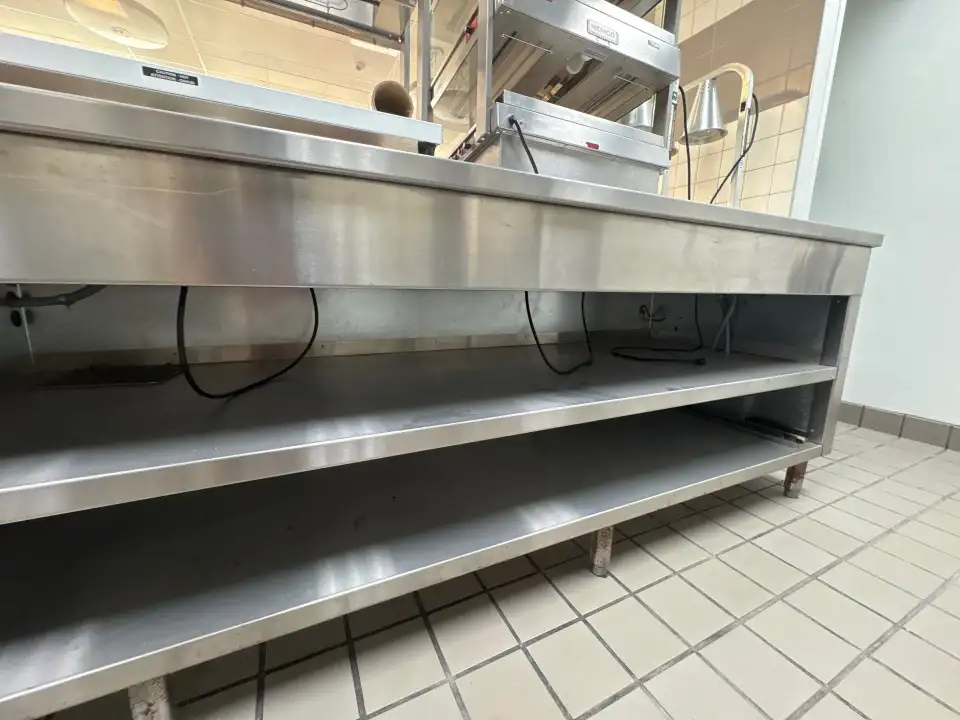
Drains can accumulate organic matter and moisture and can become persistent microbial harborage points.
They should not automatically be cleaned with the same brushes or tools used on food-contact equipment.
In higher-risk facilities, the sanitation sequence may also be designed so that drain cleaning does not recontaminate equipment that has already been cleaned and sanitized.
What Should a Commercial Cleaning Contractor Handle in a Food Processing Facility?
A cleaning contractor can support the sanitation program, but hiring an outside company does not transfer the food processor’s regulatory responsibility.
The facility still owns its food-safety system, hazard analysis, preventive controls, HACCP obligations where applicable, product release, and regulatory compliance.
The contractor’s scope should be specific about what it does and does not include.
Depending on the plant, contracted cleaning may include:
- Production-area floor cleaning
- Walls and structural surfaces
- High-level dust removal
- Non-food-contact equipment exteriors
- Warehousing areas
- Loading areas
- Employee welfare spaces
- Restrooms
- Break rooms
- Waste handling areas
- Scheduled deep cleaning
- Food-contact sanitation only where specifically trained, documented, authorized, and included in the facility’s program
For plants comparing outside contractors, Mid City Commercial Cleaning’s industrial cleaning services in Huntsville provide the service-side context separately from this compliance guide.
Put the Boundary in Writing
“Clean the production room” is not a good food-processing scope.
The contract should identify:
- Exact rooms and zones
- Food-contact versus non-food-contact responsibilities
- Equipment that can and cannot be disassembled
- Approved chemicals
- Cleaning methods
- Frequencies
- Shutdown windows
- PPE
- Lockout/tagout responsibilities
- Tool zoning
- Allergen controls
- Who performs verification
- Who can release equipment back to production
The site’s broader guide to creating a commercial cleaning scope of work explains why vague scopes lead to missed tasks and difficult contractor comparisons.
Food Safety Does Not Replace Worker Safety
A sanitation method can protect food and still create a hazard for the cleaner if the work is poorly controlled.
Depending on the task, food-processing sanitation can involve:
- Concentrated chemicals
- Foam cleaners
- Acids and alkaline products
- Hot water
- Wet walking surfaces
- Machinery
- Electrical equipment
- Elevated surfaces
- Confined or restricted spaces
- High-pressure systems
Equipment cleaning may also create lockout/tagout issues when employees enter danger zones, remove guards, or work around machinery capable of unexpected startup.
For the worker-safety side of cleaning operations, use the separate OSHA requirements for commercial cleaning guide .
What Should Alabama Food Processing Facilities Know?
Alabama treats food-processing establishments separately from restaurants and ordinary retail food operations.
Alabama State Board of Health Chapter 420-3-20 covers Food Processing Establishment Sanitation.
The rule defines a food processing establishment as a commercial operation that manufactures, packages, labels, or stores food for human consumption and does not provide that food directly to a consumer, subject to the rule’s stated exceptions.
Alabama’s rule addresses food-processing sanitation, permits, inspections, facility controls, water and plumbing, labeling, and other operational requirements.
A covered Alabama food-processing establishment generally must possess a valid permit issued by the appropriate Health Officer.
Do not assume the restaurant rules are the plant rules. The existing Mid City restaurant guide is useful for restaurant kitchens, but Alabama has a separate chapter specifically for food processing establishments.
Federal requirements can also apply at the same time.
Whether the primary federal regulator is FDA or USDA-FSIS depends on the products and operations involved, and specialized rules may apply to seafood, juice, dairy, meat, poultry, egg products, acidified foods, low-acid canned foods, and other categories.
What Should a Written Food Processing Sanitation Program Include?
A practical program should be detailed enough that two trained employees can follow the same procedure and reach a consistent result.
For each sanitation task, document as appropriate:
- Area or equipment. Identify exactly what is being cleaned.
- Responsible role. Identify who performs the work and who verifies it.
- Frequency. Define when sanitation occurs and what triggers additional cleaning.
- Preparation. State how food, packaging, ingredients, and movable equipment are protected or removed.
- Equipment shutdown. Define required lockout, disassembly, or production coordination.
- Cleaning method. Specify dry pickup, vacuuming, scraping, foaming, manual cleaning, COP, CIP, or another approved process.
- Chemical. Identify the approved cleaner or sanitizer and required preparation.
- Application parameters. Include concentration, temperature, contact time, rinse requirement, and drying instructions where applicable.
- Tool control. Specify dedicated tools and hygienic-zone restrictions.
- Inspection and verification. Define how acceptable sanitation is confirmed.
- Corrective action. Explain what happens when residue, failed verification, contamination, or equipment damage is found.
- Release to production. Identify who has authority to approve startup.
Common Food Processing Cleaning Failures
Many sanitation failures are ordinary operational mistakes rather than dramatic events.
- Cleaning only what can be seen without removing guards or accessible equipment parts
- Using sanitizer over heavy soil instead of cleaning first
- Using the wrong chemical concentration
- Failing to respect required contact time
- Using high pressure that spreads contamination
- Moving drain tools into production zones
- Reusing contaminated cloths or brushes
- Starting production before equipment is adequately dry
- Failing to clean underneath or behind equipment
- Ignoring condensation
- Treating allergen changeovers as ordinary cleaning
- Cleaning around food that should have been removed or protected
- Signing records before the task is finished
- Repeating failed sanitation without investigating why it failed
A good sanitation program is usually less glamorous than people expect.
It is disciplined repetition: the right procedure, done by trained people, verified, documented, and corrected when the data shows a problem.
How Much Does Cleaning a Food Processing Facility Cost?
Food-processing sanitation should not be quoted as though it were an ordinary office-cleaning job.
Two plants with the same square footage can require very different labor.
Pricing can change based on:
- Production schedule
- Overnight or shutdown access
- Hygienic zoning
- Food-contact responsibilities
- Required equipment disassembly
- Wet versus dry sanitation
- Chemicals
- Tool segregation
- PPE requirements
- Allergen changeovers
- Verification responsibilities
- High-level surfaces
- Drain work
- Floor condition
- Required documentation
For context, Mid City’s broader commercial cleaning pricing guide discusses standard commercial pricing structures.
Those office-cleaning figures should not be treated as a food-processing sanitation quote.
A plant requiring controlled production shutdowns, special chemicals, equipment access, hygienic segregation, food-contact responsibilities, or sanitation documentation should be scoped separately.
The cheapest hourly number is not always the cheapest sanitation program. If the quote leaves equipment, zones, shutdown responsibilities, verification, and exclusions undefined, the apparent savings can turn into production delays and scope disputes.
Food Processing Facility Cleaning Checklist
Before approving a sanitation program or contractor scope, confirm:
- Regulatory jurisdiction has been identified.
- Food-contact and non-food-contact surfaces are clearly defined.
- Cleaning frequencies match actual hazards and production conditions.
- Allergen changeovers are addressed separately where necessary.
- Dry and wet cleaning methods are appropriate for the facility.
- Approved chemicals and exact label directions are documented.
- Concentration checks are performed when required.
- Contact times are understood.
- Drain and floor tools are segregated appropriately.
- Equipment-disassembly responsibilities are clear.
- Lockout/tagout responsibilities are defined where applicable.
- Environmental monitoring is included when required by the food-safety plan.
- Verification methods are defined.
- Corrective actions are documented.
- Production release authority is clear.
- Records are retained for the applicable period.
Frequently Asked Questions About Food Processing Facility Cleaning Standards
What are the main cleaning standards for food processing facilities?
For many FDA-regulated processors, 21 CFR Part 117 requires sanitary facilities and equipment, safe cleaning and sanitizing compounds, appropriate cleaning of food-contact and non-food-contact surfaces, protection against contamination and allergen cross-contact, and written sanitation preventive controls when sanitation is necessary to control a food-safety hazard. USDA-inspected meat, poultry, and egg-product establishments are also subject to applicable FSIS sanitation and Sanitation SOP requirements.
How often must food processing equipment be cleaned?
FDA does not impose one universal cleaning interval for every food processing facility. Food-contact surfaces must be cleaned as frequently as necessary to prevent contamination and allergen cross-contact. The correct frequency depends on the product, process, hazard, production duration, equipment, and sanitation verification results.
Do all food processing facilities need to sanitize after cleaning?
Not every surface and process is treated identically. Under FDA cGMPs, wet-processing food-contact surfaces must be cleaned and sanitized when necessary to protect against allergen cross-contact or microorganism introduction. Low-moisture processes may require different methods because unnecessary moisture can itself create a risk.
Is there one required sanitizer concentration for food processing plants?
No. The correct concentration, contact time, application method, rinse requirement, and approved surfaces depend on the exact EPA-registered sanitizer label and intended use. A concentration copied from another chemical should not be assumed to apply.
Does FDA require environmental monitoring?
Environmental monitoring is required as an appropriate verification activity when contamination of a ready-to-eat food with an environmental pathogen is a hazard requiring a preventive control. The written procedure must establish scientifically valid sampling parameters adequate to determine whether the preventive controls are effective.
How long must FDA food-processing sanitation records be kept?
Records required by 21 CFR Part 117 generally must be retained for at least two years after they are prepared, although specific provisions apply to certain records and supporting documentation.
How long must USDA Sanitation SOP records be kept?
Under 9 CFR 416.16, required Sanitation SOP records must be kept for at least six months. They must remain at the official establishment for 48 hours after completion and may then be stored offsite if they can be provided to FSIS within 24 hours of request.
Can a commercial cleaning company clean food production equipment?
Potentially, but responsibility must be clearly defined. The processor should determine whether the contractor is trained and authorized for the specific food-contact equipment, chemicals, allergen controls, hygienic zones, equipment shutdown procedures, verification requirements, and regulatory framework involved.
Is ATP testing enough to prove equipment is safe?
No. ATP can be a useful sanitation-verification tool, but a passing reading does not prove that every pathogen or allergen is absent. Verification methods should match the hazard and the facility’s food-safety plan.
Are restaurant cleaning rules the same as food processing plant rules?
No. Restaurants and retail food establishments operate under different regulatory structures from many manufacturing and processing plants. The applicable FDA, USDA, state, local, HACCP, and commodity-specific requirements should be identified before using a cleaning procedure.
Regulatory Sources Reviewed for This 2026 Guide
- Electronic Code of Federal Regulations — 21 CFR 117.35, Sanitary Operations
- Electronic Code of Federal Regulations — 21 CFR 117.135, Preventive Controls
- Electronic Code of Federal Regulations — 21 CFR 117.165, Verification of Implementation and Effectiveness
- Electronic Code of Federal Regulations — 21 CFR 117.315, Record Retention
- Electronic Code of Federal Regulations — 9 CFR 416.12, Development of Sanitation SOPs
- Electronic Code of Federal Regulations — 9 CFR 416.13, Implementation of Sanitation SOPs
- Electronic Code of Federal Regulations — 9 CFR 416.16, Sanitation Recordkeeping
- USDA Food Safety and Inspection Service — Sanitizers in FSIS-Inspected Establishments
- U.S. Environmental Protection Agency — May 13, 2026 EPA-Approved Food-Contact Sanitizer Label
- Alabama State Board of Health — Chapter 420-3-20, Food Processing Establishment Sanitation
Regulatory responsibility can vary by food, process, plant, and jurisdiction. This guide summarizes commonly applicable sanitation requirements and is not a substitute for the facility’s food-safety plan, HACCP program, preventive controls, permit requirements, chemical labels, regulatory guidance, or qualified food-safety advice.