A commercial cleaning scope of work is the written list of every task a cleaning company agrees to perform, how often each task happens, and which areas of the building it covers. A standard scope typically includes trash removal, dusting, vacuuming and mopping, restroom sanitizing and restocking, break room cleaning, and entryway glass cleaning. It usually excludes specialty work like carpet extraction, floor stripping and waxing, and exterior window washing, which are quoted and scheduled separately. The scope directly shapes your cleaning cost — the more tasks and visits included, the higher the price.

Why the Scope of Work Matters More Than the Price Alone
When two commercial cleaning quotes come in at different prices, the gap almost never comes down to one company being “better” than the other. It comes down to what’s actually included. A $600/month quote and a $1,200/month quote for the same building usually reflect two different scopes of work — different task lists, different frequencies, or different square footage covered.
That’s why we always recommend asking for an itemized scope of work before comparing prices. Without one, you’re comparing two numbers with no way to know what you’re actually buying. If you want to see how these variables translate into real numbers, our guide on commercial office cleaning cost per square foot breaks down pricing by building size and service level.
Core Tasks Included in Almost Every Scope of Work
Regardless of industry, most janitorial services scopes include a baseline set of tasks performed on a nightly or several-times-a-week basis:
- Trash and recycling removal — emptying bins, replacing liners, and disposing of waste
- Dusting — desks, shelves, baseboards, and horizontal surfaces
- Vacuuming carpeted areas and mopping hard floors
- Restroom sanitizing — toilets, sinks, mirrors, floors, and restocking soap, paper towels, and toilet paper
- Break room and kitchen area cleaning — countertops, sinks, and appliance exteriors
- Interior glass and entryway cleaning — doors, sidelights, and glass partitions
- Spot-cleaning walls and light switches

These core tasks make up the bulk of a standard office cleaning contract and are usually priced together as the “base” service.
Specialized Services Often Added to the Scope
Beyond the daily basics, many facilities add specialized services to their scope of work — either on a recurring schedule or as periodic deep-cleaning add-ons:
Floor care. Routine mopping keeps floors presentable, but strip and wax floor services restore shine and protect flooring long-term, and commercial carpet cleaning extracts dirt that daily vacuuming leaves behind. These are typically scheduled quarterly or semi-annually rather than nightly.
Window cleaning. Interior glass is usually covered in the base scope, but full window cleaning — including exterior and upper-story glass — is billed separately and scheduled monthly or seasonally.
Disinfecting and sanitizing. High-touch point disinfection (door handles, light switches, shared equipment) has become a common scope add-on, especially for healthcare and high-traffic facilities. See our commercial sanitizing and disinfection services for what’s typically included.
Day porter services. Facilities with heavy daytime foot traffic — gyms, retail, medical offices — often add a day porter to the scope for continuous cleaning during business hours, not just after close.
Post-construction cleanup. Renovations require a one-time, heavier scope covering dust removal, debris hauling, and detail cleaning. Our post-construction cleaning page outlines what that scope looks like.
Exterior and hood cleaning. Restaurants frequently add commercial hood cleaning for fire-code compliance, and many facilities add pressure washing for sidewalks, dumpster pads, and building exteriors.
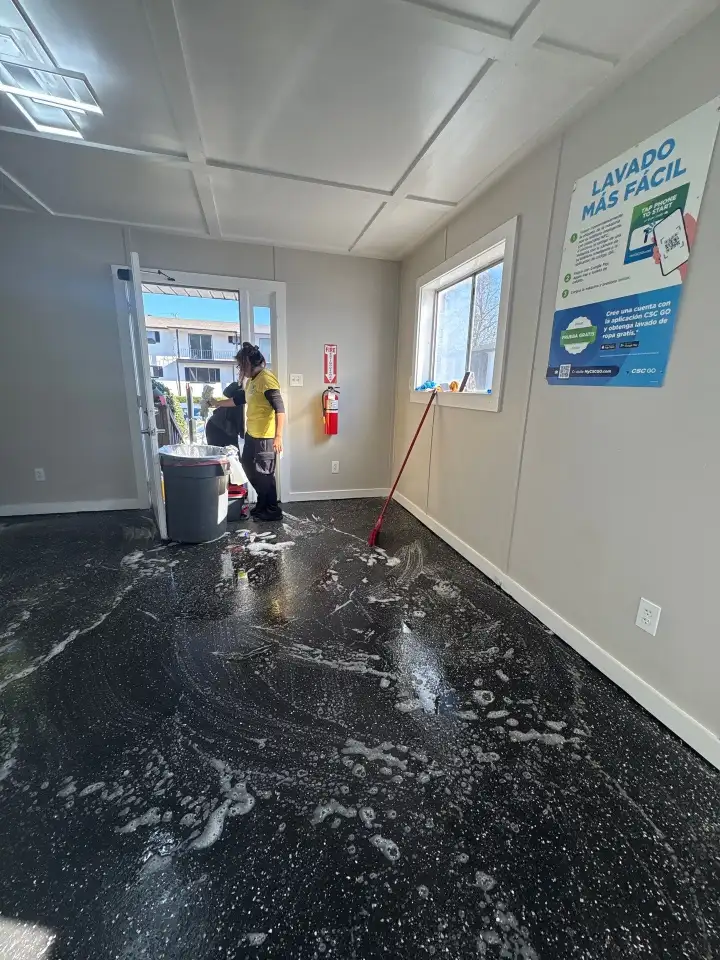
What’s Usually NOT Included in a Standard Scope
Being upfront about exclusions is part of an honest scope of work. Most standard commercial cleaning contracts do not include:
- Deep carpet extraction or floor stripping/waxing (quoted as add-ons)
- Exterior or high-rise window washing
- Biohazard, mold, or bodily fluid cleanup
- Pest control
- Repairs (plumbing, electrical, drywall)
- HVAC duct cleaning
- Furniture or upholstery deep cleaning
If a quote seems unusually low, it’s worth checking whether these items were simply left out rather than included for free.
How Scope of Work Directly Affects Cleaning Cost
Cleaning cost is driven almost entirely by three scope variables:
- Square footage and layout — more area and more restrooms mean more labor time per visit.
- Frequency — nightly service costs more than three-times-a-week service, which costs more than weekly service.
- Task list depth — adding floor care, disinfecting, or a day porter increases the scope, and therefore the price.
This is why two buildings of the same size can have very different monthly rates. A tighter scope (fewer visits, basic tasks only) lowers cost; a broader scope (daily visits plus specialty services) raises it. For actual cost ranges by building size and service level, see our detailed breakdown: How Much Does Commercial Office Cleaning Cost per Square Foot?
Sample Task Frequency Chart
| Task | Typical Frequency |
|---|---|
| Trash removal & liner replacement | Every visit |
| Vacuuming & mopping | Every visit |
| Restroom sanitizing & restocking | Every visit |
| Break room cleaning | Every visit |
| Interior glass & entryway cleaning | Every visit |
| High-touch point disinfecting | Every visit or daily |
| Carpet extraction | Quarterly or semi-annually |
| Strip and wax flooring | Quarterly or semi-annually |
| Exterior window cleaning | Monthly or seasonally |
| Hood cleaning (restaurants) | Quarterly (per fire code) |
| Pressure washing exteriors | Seasonally |
How to Make Sure Your Scope of Work Matches Your Facility
Before signing a cleaning contract, ask the provider these questions:
- Can you give me a written, itemized scope of work — not just a flat price?
- Which tasks are included in every visit, and which are periodic add-ons?
- What counts as an “extra” that would trigger an additional charge?
- How is the scope adjusted if my square footage or foot traffic changes?
- What’s explicitly excluded from this agreement?
A cleaning company that’s willing to put all of this in writing upfront is one that’s confident in what it delivers. If you’d like a scope of work built around your specific facility — office, medical, restaurant, or industrial — our team can walk through it with you on a free walkthrough.
Frequently Asked Questions
What is a scope of work in commercial cleaning?
It’s the written document listing every cleaning task, its frequency, and the areas it covers — the reference both you and your cleaning company use to confirm the work matches what was agreed.
Does a bigger scope of work always cost more?
Generally yes, since more tasks and visits require more labor. But a clearly defined scope can also reduce cost by eliminating overlap and preventing surprise add-on fees for work that should have been scheduled from the start.
What’s typically excluded from a commercial cleaning scope of work?
Deep carpet extraction, floor stripping and waxing, exterior window washing, biohazard cleanup, pest control, and repairs are usually excluded from the standard scope and quoted separately.
How do I know if a cleaning quote covers everything I need?
Ask for an itemized scope of work rather than a flat monthly number. It should specify each task, how often it happens, which areas are covered, and what qualifies as an add-on.
Want a cleaning scope of work built specifically for your facility? Contact Mid City Commercial Cleaning for a free walkthrough and itemized quote.