Restaurant Deep Cleaning Cost: Kitchen, Floors and Scope Explained
Restaurant deep cleaning cost depends on grease buildup, the equipment and surfaces included, access, labor hours, and whether specialist hood or exhaust work is excluded. To see the arithmetic, a hypothetical two-person crew working six hours each at $60 per labor hour produces $720 in labor before equipment rental, materials or specialty services. A dining-room detail and a grease-heavy commercial kitchen are not interchangeable jobs. Request an itemized quote identifying floors, walls, backsplashes, movable equipment, refrigeration exteriors, drains, and any exclusions. Do not treat an online per-square-foot number as a reliable fixed quote for a kitchen without a walkthrough.
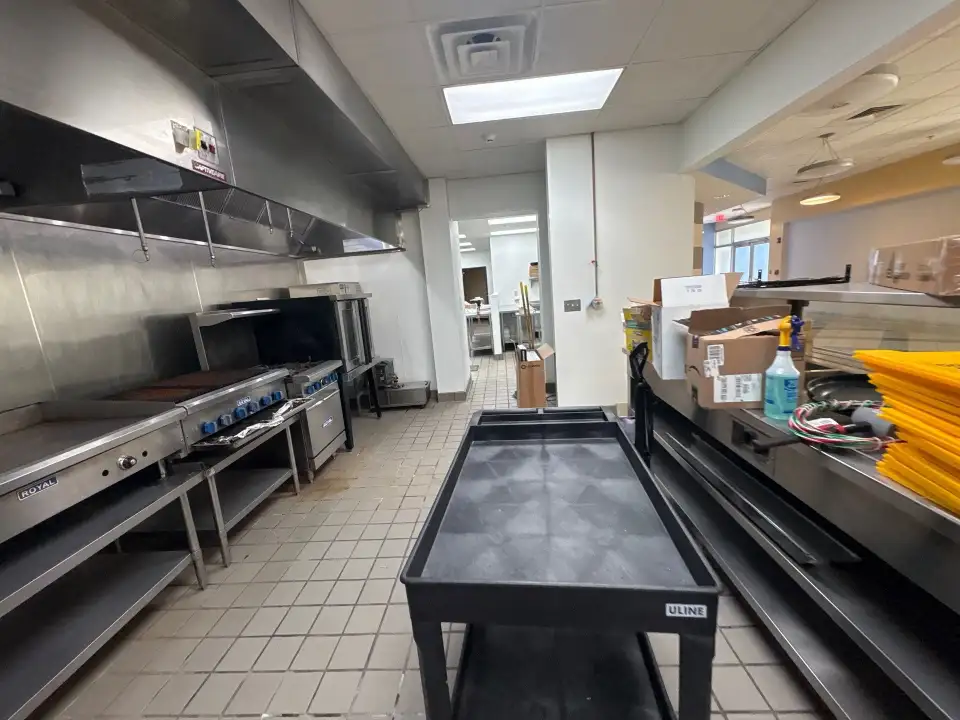
Define deep cleaning separately from everyday closing work
Daily restaurant closing cleaning removes food debris, handles food-contact surface cleaning and sanitizing, and keeps floors, drains and equipment safe for ongoing operation. A deep clean addresses accumulated soil in less accessible locations: grease film behind equipment, neglected baseboards, hard-to-reach lower surfaces, detailed grout and corners. Deep cleaning supports daily controls; it does not replace them.
Ask the manager to mark every appliance and work zone on a drawing. A kitchen that requires heavy disassembly or deep reach behind fixed machinery cannot be priced like a dining room with open floor space. Decide beforehand who disconnects or moves equipment, which components require authorized technicians, and whether gas or electrical work is out of scope.
Identify grease, access and shutdown requirements
Heavy grease accumulation can require repeated applications and controlled dwell time for compatible degreasers. Floors with sticky buildup, textured tiles and numerous low-clearance appliances take longer than open flooring. A vendor should explain cleaning methods, chemical compatibility, ventilation, wastewater handling and protection of nearby food or packaging.
Restaurant deep cleans are often scheduled outside food production hours. The cost may reflect late-night access, equipment cooling time, staff escorts and the limited window before the morning prep shift. If equipment must be cooled and moved, confirm who is responsible; a janitorial crew should not improvise with hot or energized systems.
Separate hood and exhaust work explicitly
Commercial hood, duct and exhaust cleaning is a distinct specialist scope with inspection, access and documentation requirements. A generic kitchen deep-clean quote should not claim to include a full exhaust system service unless the contractor can identify the qualified scope and responsibilities. Ask for a separate bid if the hood system requires it.
The same distinction applies to pest treatment, grease-trap pumping, refrigeration repair and regulated waste handling. Those services are sometimes requested during a restaurant cleanup but are not standard janitorial tasks. Written exclusions prevent the phrase “full kitchen clean” from becoming a source of expensive misunderstandings.
Budget by work zone rather than tables or floor area alone
Break the property into food preparation, cooking line, dish area, cold storage exterior surfaces, dining, bathrooms, entrances and staff facilities. Assign expected crew hours and method to each zone. The visible dining-room area may be large but straightforward, while a small cook line can dominate labor due to grease and numerous contact points.
Pricing also depends on the baseline condition. A restaurant maintained daily may need moderate periodic detail work. A kitchen that has not been deep cleaned for a long time may need an initial restoration visit followed by easier recurring maintenance. Ask vendors to distinguish the first visit from later visits.
Evaluate completed work and safety, not just shininess
Use a sign-off checklist with photographs only where safe and approved, including underside edges, floor-wall junctions, sink surrounds, door gaskets and accessible appliance exteriors. Cleaning workers must protect food-contact areas, avoid chemical contamination and follow the establishment’s food-safety plan.
FDA Food Code guidance addresses food-contact cleaning and sanitation, but it does not create one universal contractor price for restaurant deep cleaning. A realistic proposal explains how it protects operating readiness and what cannot safely be completed during the allotted closure.
Illustrative kitchen deep-clean estimate
Assume a two-person crew works six on-site hours each: 12 labor hours. At a hypothetical $60 per labor hour, labor is $720. Add $90 in specifically approved materials and $140 for an optional suitable floor-machine rental; the sample total is $950. Hood and duct cleaning, grease trap service, repair, taxes and after-hours premiums are not included. The numbers illustrate a quote breakdown, not a verified local rate.
Practical checks before approving a quote
Prepare the restaurant before the crew arrives
The manager should clarify equipment cool-down, safe access, food protection, where movable items are stored, and what waste or grease disposal arrangements exist. If the workspace is not ready, the paid cleaning window may be consumed by waiting. A realistic estimate assumes coordinated handover rather than unlimited preparation labor.
Specify acceptance before opening
A written handover should note finished areas, remaining exclusions, equipment not moved, any chemicals requiring further steps and whether final food-contact sanitizing is the responsibility of restaurant staff. A deep clean should never create confusion about the establishment’s own hygiene and readiness checks.
North Alabama considerations
For a Huntsville restaurant, the operational question is whether cleaning fits between closing and food preparation rather than whether the address is near a research campus. Downtown restaurants with tight delivery access may need a narrower equipment-loading plan; larger dining spaces with private events may have uneven cleaning windows. Any reference to local inspection expectations must be checked against the applicable Alabama health authority and the business’s food-safety program.
When the cheaper option can make sense
The cheapest proposal is not necessarily poor quality, and the most expensive degreaser package is not automatically safer. If a kitchen is maintained well, targeted floor and equipment detailing may be enough. If buildup reaches a specialist exhaust component, a general cleaner should recommend the appropriate specialist rather than quietly claiming every task is covered.
Related Mid City guides and service information
These resources address adjacent questions. They are linked for context; this article is written to answer its own narrower question.
For the general service offering, see restaurant cleaning services in Huntsville.
For kitchen procedure guidance, review restaurant kitchen cleaning for health-code readiness.
To distinguish specialist system work, read restaurant hood and grease cleaning frequency.
To build an itemized contract, consult commercial cleaning scope guidance.
Frequently asked questions
Does restaurant deep cleaning include the exhaust hood?
Not automatically. Hood, duct and exhaust-system cleaning should be quoted with its own defined scope and qualified provider where needed. Never infer inclusion from the phrase full kitchen.
Is a restaurant deep clean priced by square foot?
Sometimes floor areas are priced that way, but kitchen grease, equipment and access usually require task or labor assessment. Floor area alone under-describes the job.
How often should restaurant deep cleaning happen?
There is no one price-driven schedule suitable for every restaurant. Frequency depends on production volume, grease accumulation, facility condition, routine cleaning controls and applicable requirements.
Will the kitchen be ready to prepare food after the deep clean?
The scope should specify rinse, drying, chemical storage, reassembly and manager acceptance. The establishment must still carry out its own food-safety procedures before reopening.
Sources and standards
These sources support applicable labor, safety or cleaning-practice claims; they do not establish the article’s hypothetical pricing scenarios.