Janitorial Services
What Should Janitorial Services Include for Decatur, AL Businesses?
Janitorial services for a Decatur, Alabama business should include a written recurring scope that separates routine cleaning from periodic specialty work. A typical program covers trash and recycling, restroom cleaning, breakroom cleaning, dusting, touchpoint wiping, vacuuming, hard-floor maintenance, spot cleaning, and supply checks. The exact frequency should reflect occupancy, public traffic, shift schedules, floor types, and the facility’s industry. Decatur has both office and industrial activity, so a good janitorial plan should not force the same checklist onto every building. Warehouses, manufacturing offices, retail spaces, churches, and professional offices can share core tasks while requiring very different floor, dust, restroom, and scheduling frequencies.
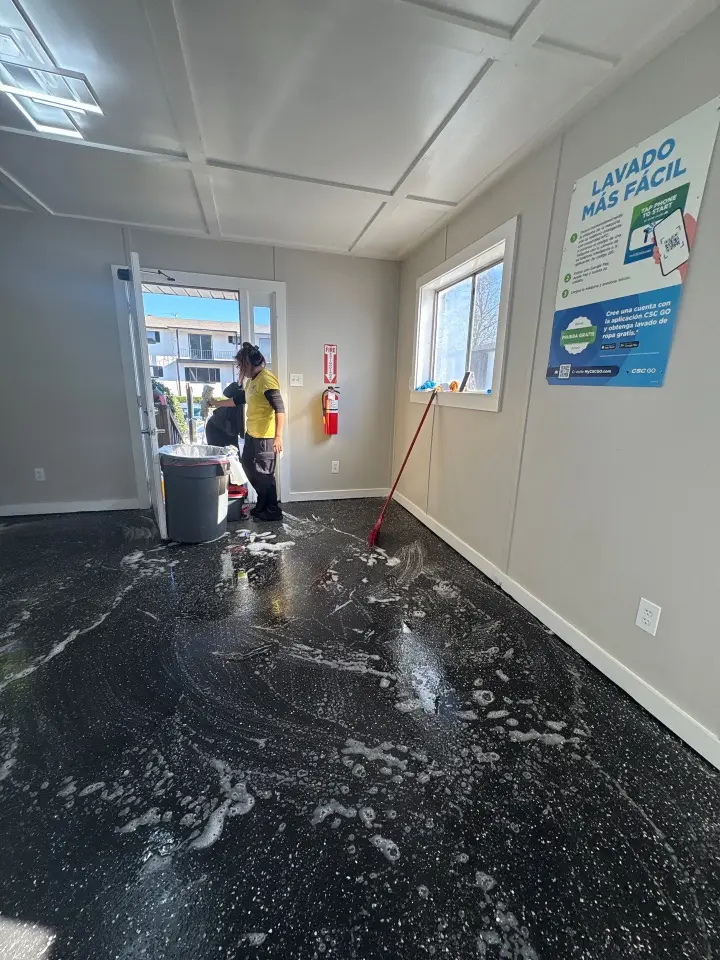
Core recurring janitorial tasks
Most recurring programs begin with waste removal, restroom service, breakroom or kitchenette cleaning, vacuuming, hard-floor care, dusting, and spot cleaning. The proposal should state what “restroom service” means: toilets, urinals, sinks, partitions, mirrors, dispensers, floors, high-touch points, and supply restocking should be named instead of implied.
Trash should also be defined. Some clients expect liners replaced every time; others replace liners only when soiled. Recycling may require separate handling. If the building has production waste, packaging materials, oily debris, chemicals, sharps, or regulated waste, those items should be excluded from ordinary janitorial trash unless the provider is specifically equipped and authorized to handle them.
Separate daily, weekly, and periodic work
A recurring janitorial contract becomes easier to manage when tasks are grouped by frequency. High-use restrooms and entrances may need service every visit. Low-touch ledges, vents, baseboards, and detailed dusting may run weekly or monthly. Carpet extraction, high dusting, machine scrubbing, stripping and waxing, and exterior pressure washing are usually periodic projects rather than routine nightly work.
This frequency map prevents “scope creep.” It also gives the facility manager a way to reduce cost intelligently. If budget is tight, do not simply remove tasks at random. Keep hygiene-critical and appearance-critical work at the right frequency, then move lower-use spaces or detail work to a less frequent rotation.
How Decatur industrial and mixed-use facilities differ
Decatur-area businesses can include industrial, manufacturing, logistics, professional services, retail, and support offices. A mixed office/industrial site may need standard office cleaning in the front of the building while the back-of-house area requires more aggressive floor care, dust control, or production-safe procedures. The two zones should be scoped separately.
If the facility includes a warehouse or production environment, define whether the janitorial crew is responsible only for offices, restrooms, breakrooms, and common areas or whether they also clean warehouse floors and operational zones. For manufacturing-specific planning, the site’s manufacturing facility cleaning checklist owns that deeper industrial task framework.
Make floor care explicit
Floors are one of the biggest sources of misunderstanding in janitorial contracts. “Mop floors” may not cover machine scrubbing, burnishing, stripping, waxing, extraction, stain treatment, or concrete dust removal. List each floor type in the facility and identify the routine method plus any periodic maintenance cycle.
For warehouses, the warehouse floor cleaning best-practices guide covers floor-specific methods. For resilient commercial floors, use the site’s commercial floor cleaning service overview as an adjacent service reference rather than trying to bury specialty floor restoration inside a general janitorial checklist.
Clarify supplies and consumables
Determine whether the cleaner supplies chemicals, equipment, liners, paper products, soap, and hand sanitizer. A labor-only price can look attractive until consumables are added separately. Conversely, a bundled consumables program may make budgeting easier but should explain product standards, approved substitutions, and inventory control.
Ask how Safety Data Sheets are maintained and how chemicals are diluted. Mid City’s SDS requirements guide explains why chemical documentation matters even in routine commercial cleaning.
Require quality control and communication
A janitorial scope should state who supervises the account, how inspections are performed, how requests are submitted, and what happens after a missed task. For a facility with multiple shifts, designate one client contact and one cleaning-company contact so corrections do not get lost between departments.
Quality control should focus on repeatable outcomes rather than occasional “deep clean” appearances. Restrooms, entrances, breakrooms, floors, and high-touch areas should look consistently maintained from week to week. Repeated complaints in one zone usually indicate a frequency, staffing, training, or scope problem that should be corrected systematically.
Where this guide fits with existing Decatur service pages
This article answers what a Decatur janitorial program should include. It is intentionally not a replacement for Mid City’s local transactional commercial cleaning in Decatur, AL page, which owns the service-hiring intent. Keeping the article educational allows it to support the service page without creating a second URL trying to rank for the exact same conversion query.
Authoritative references
How to build a Decatur janitorial scope before requesting bids
Start with a simple room inventory. List offices, restrooms, breakrooms, conference rooms, lobbies, corridors, warehouse support spaces, and any production-adjacent areas. Next to each zone, write the desired frequency and the outcome you expect. “Restrooms cleaned every visit and stocked before first shift” is clearer than “clean restrooms.” “Vacuum open office carpet three times per week and spot-vacuum daily” is clearer than “vacuum as needed.” Specific outcomes reduce disagreement and make quotes easier to compare.
Then identify seasonal or periodic work that should not disappear from the budget: carpet extraction, machine scrubbing, high dusting, interior glass, floor finish work, pressure washing, or annual deep cleaning. Decide whether those items should be built into the annual contract or quoted separately when due. Finally, schedule a 30-day and 90-day review after service begins. Early reviews are useful because the initial frequency assumptions may be too high in some zones and too low in others. Adjusting the scope from actual building conditions is more effective than waiting until dissatisfaction builds.
Local scope tip: For Decatur facilities with both office and industrial areas, price and inspect each zone separately so the recurring janitorial contract reflects the actual work instead of averaging unlike spaces together.
Frequently asked questions
What is normally included in janitorial services?
Routine janitorial services usually include trash, restrooms, breakrooms, dusting, vacuuming, hard-floor cleaning, touchpoint wiping, spot cleaning, and basic supply checks. Periodic floor restoration, carpet extraction, high dusting, and exterior services may be separate.
How often should a Decatur business have janitorial service?
Frequency depends on occupancy and use. Busy offices, industrial support areas, public-facing facilities, and high-use restrooms may need several visits per week or daily service, while small low-traffic offices may need less.
Are warehouse and production floors included in janitorial service?
Not automatically. The scope should state whether the crew cleans only office/common areas or also enters warehouse and production zones. Specialty industrial floor work should be defined separately.
Should cleaning supplies be included in the monthly price?
They can be included or billed separately. The important point is to define chemicals, equipment, liners, paper products, soap, and other consumables clearly before comparing proposals.
Reviewed for publication using Mid City Commercial Cleaning’s current article design system, local SEO intent mapping, and publishing QA requirements.