Office Cleaning
How to Reduce Employee Sick Days With Office Cleaning
Office cleaning can help reduce employee sick days by lowering the amount of germs on frequently touched surfaces and supporting a broader workplace hygiene program, but cleaning alone cannot guarantee lower absenteeism. Focus routine cleaning on high-touch points such as door handles, shared desks, breakroom counters, restroom fixtures, elevator buttons, and shared equipment. Clean regularly, disinfect when someone has been obviously ill or when outbreak conditions justify it, and pair surface cleaning with hand hygiene, good ventilation, and policies that let sick employees stay home. Respiratory illnesses also spread through the air, so a clean office should be one layer of prevention—not the entire strategy.
That distinction matters for employers. “Cleaner office equals fewer sick days” is too simple. Employee absence can be caused by respiratory illness, gastrointestinal illness, chronic health conditions, family-care responsibilities, injuries, stress, and many other factors. What office cleaning can do is reduce one controllable route of exposure and support healthier day-to-day workplace habits.

Can Office Cleaning Actually Reduce Employee Sick Days?
There is a reasonable prevention case for regular workplace cleaning, but the evidence does not support promising that a cleaning contract by itself will produce a specific drop in sick days. CDC says regularly cleaning surfaces helps prevent the spread of germs that can cause respiratory infections, while also recommending other controls such as ventilation, vaccination, hand hygiene, and policies that encourage sick workers to stay home.
One useful office-based study illustrates why the broader hygiene program matters. A randomized cluster trial involving 324 U.S. office workers tested a multimodal hand-hygiene intervention that included training, hand sanitizer, and posters. The intervention group reported a 31% relative reduction in combined respiratory/influenza-like and gastrointestinal infections. Lost work days fell by 21% relative to the control group, but that absenteeism difference was not statistically significant. The study therefore supports workplace hygiene as a useful layer, not a promise that one intervention will eliminate absence.
Use the evidence carefully: the 31% figure came from a hand-hygiene intervention, not from professional office cleaning alone. It should not be marketed as “office cleaning reduces sick days by 31%.”
For employers, the strongest approach is to treat cleaning as part of a system: cleaner high-touch surfaces, accessible handwashing and sanitizer, appropriate ventilation, sensible illness policies, and targeted disinfection when conditions warrant it.
Which Office Surfaces Should You Prioritize?
Not every surface carries the same practical exposure value. CDC recommends regular cleaning of frequently touched surfaces, and that principle is useful for office scopes because it directs labor toward the places many hands share.
Shared Entry Points
Door handles, push plates, access-control touchpoints, elevator buttons, and reception counters can be touched by nearly everyone entering the workplace.
Shared Work Equipment
Conference-room controls, shared phones, copier controls, keyboards used by multiple people, touchscreens, and shared tools deserve more attention than rarely touched decorative surfaces.
Breakrooms
Refrigerator handles, microwave controls, coffee equipment, faucet handles, counters, table edges, and cabinet pulls combine hand contact with food and drink activity.
Restrooms
Door hardware, faucet handles, flush controls, dispensers, counters, and other touchpoints should be included in a consistent restroom-cleaning routine.
A useful scope is specific. “Clean office surfaces” is vague. “Wipe and clean reception counters, shared conference controls, breakroom touchpoints, restroom fixtures, and main-entry handles each service visit” is measurable.
When Should You Clean, and When Should You Disinfect?
Routine cleaning and disinfection are not the same task. CDC states that cleaning with soap or detergent removes most types of harmful germs from surfaces in many situations. For community facilities such as offices, CDC recommends cleaning high-touch surfaces regularly and cleaning other surfaces when visibly dirty.
Disinfection is more targeted. CDC recommends disinfecting areas where people have obviously been ill and notes that local health authorities may recommend additional disinfection during certain outbreaks. If disinfection is used, the surface should generally be cleaned first and the EPA-registered disinfectant should be used according to its label.
This is more efficient than treating every night as an outbreak response. Over-disinfection can add chemical use, labor, and surface wear without necessarily improving outcomes in an ordinary office.
When a facility actually needs a dedicated treatment rather than routine office maintenance, the separate commercial sanitizing and disinfection service page owns that service intent.
How Often Should Illness-Focused Office Cleaning Happen?
The right frequency depends on occupancy, traffic, shared equipment, restroom use, hybrid schedules, seasonality, and whether the office serves the public. A 10-person private suite does not need the same touchpoint frequency as a busy call center, clinic reception area, or multi-tenant lobby.
As a practical rule, high-touch surfaces should be included in each scheduled cleaning visit, while higher-traffic workplaces may need additional daytime attention. Restrooms and breakrooms often deserve a higher frequency than low-use private offices because many people share the same fixtures and contact points.
Frequency should not be guessed from square footage alone. For a dedicated discussion of daily, weekly, and multi-visit schedules, use the published guide on how often an office should be professionally cleaned. That URL owns the frequency intent; this article focuses on reducing illness exposure.
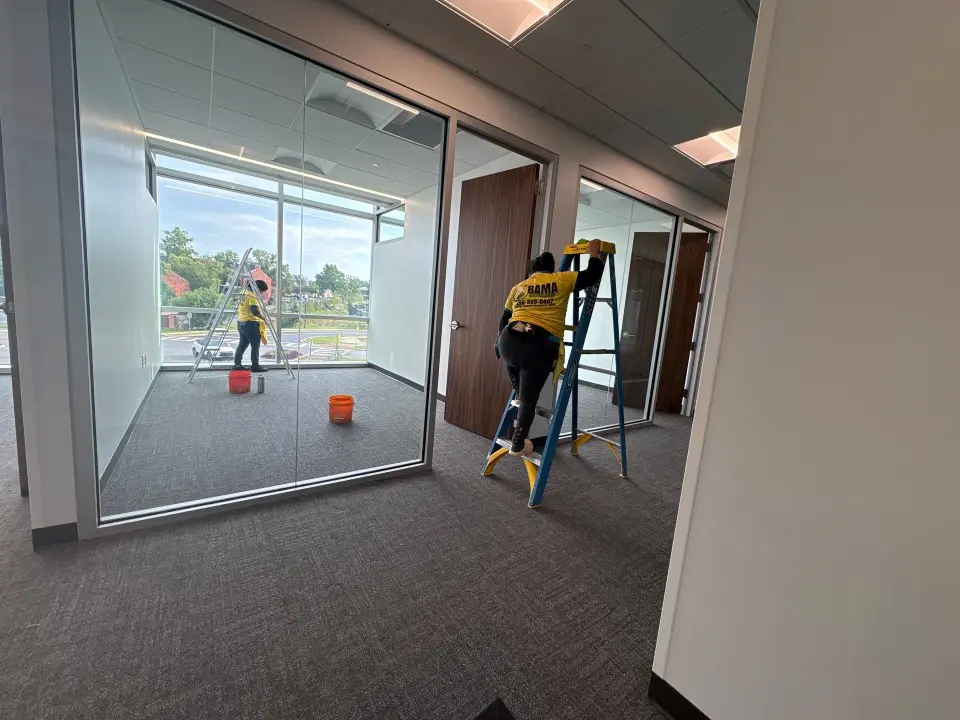
A Practical Office Cleaning Plan for Reducing Illness Exposure
| Area | Routine cleaning priority | When to consider additional disinfection |
|---|---|---|
| Entrances & reception | Handles, push plates, counters, shared pens, touchscreens. | After obvious illness contamination or when outbreak guidance calls for it. |
| Workstations | Shared desks, phones, keyboards, mice, chair arms where included in scope. | Shared equipment used by an ill employee may justify targeted disinfection where compatible. |
| Conference rooms | Tables, chair arms, shared controls, door hardware. | After high-occupancy meetings during an illness event or when directed by workplace protocol. |
| Breakrooms | Counters, appliance handles, coffee stations, faucets, tables. | When someone has been ill in the area or a specific contamination event occurs. |
| Restrooms | Fixtures, dispensers, counters, door hardware, floors. | Targeted disinfection can be appropriate for higher-risk contamination and illness events. |
The plan should also define who cleans employee-owned electronics, whether cleaners may move desk items, which products are approved for sensitive surfaces, and how facility managers report an illness-related cleanup request. Those details prevent the gap between a written scope and what actually happens after hours.
Cleaning Works Better as One Layer of a Healthier Workplace
Surface cleaning cannot control every transmission route. Respiratory viruses can spread through the air, especially indoors and in crowded spaces. CDC therefore recommends cleaner-air strategies as a core prevention layer and says organizations should ensure existing HVAC systems meet applicable outdoor-air ventilation requirements. Where possible, CDC recommends aiming for 5 or more air changes per hour (ACH) of clean air through ventilation, filtration, or equivalent air cleaning.
Hand hygiene is another important layer. CDC says workplaces should provide soap, water, drying facilities, and alcohol-based hand sanitizer with at least 60% alcohol where handwashing is not readily available. It also recommends locating sanitizer near shared equipment, entrances, and other high-touch areas.
And policy matters. CDC advises organizations to encourage sick employees to stay home and to support that behavior with leave or flexible-work policies. A spotless office cannot compensate for a contagious employee working shoulder-to-shoulder with coworkers for eight hours.
Layered prevention is the practical model: clean high-touch surfaces + make hand hygiene easy + improve cleaner air + keep sick employees home + use targeted disinfection when needed.
Common Mistakes That Weaken an Office Hygiene Program
- Cleaning everything equally. Labor gets diluted when high-touch points receive the same attention as low-touch walls or decorative surfaces.
- Skipping breakrooms and shared equipment. These areas combine frequent hand contact with communal use.
- Disinfecting without cleaning first. Dirt and residue can interfere with disinfectant performance.
- Wiping disinfectant dry too quickly. The product label may require a defined wet contact time.
- Using a product on incompatible electronics or finishes. Product labels and manufacturer instructions matter.
- Ignoring employee hand hygiene. Clean surfaces can be recontaminated quickly through shared touchpoints.
- Ignoring ventilation. Surface cleaning does not remove airborne respiratory particles.
- Expecting cleaners to solve workplace illness policy. Sick-leave, vaccination, HVAC, and HR decisions sit outside a cleaner’s scope.
Chemical controls also need to be handled correctly. Employees who use hazardous cleaning chemicals may need access to Safety Data Sheets and appropriate hazard information. The separate article on SDS access for cleaning chemicals covers that narrower topic, while the site’s commercial cleaning OSHA guide owns broader employer compliance.
How Can You Tell Whether Your Cleaning Plan Is Working?
Do not judge the program only by whether the office smells clean. A better evaluation combines cleaning-quality checks with operational data.
- Audit high-touch completion. Confirm that the agreed touchpoints are actually being serviced at the promised frequency.
- Track complaints. Restroom, breakroom, odor, spill, and shared-equipment complaints can reveal weak points in the scope.
- Review illness trends cautiously. Compare absence patterns over time, but do not assume every change was caused by cleaning. Community illness levels, remote-work policies, seasonality, vaccination, and workforce changes can all affect sick days.
- Adjust by traffic. If one breakroom or entry sees far more use than expected, move labor toward the actual exposure pattern.
- Reassess after an outbreak or occupancy change. The right plan for 25 employees may not fit the same office after headcount doubles.

Frequently Asked Questions
Can office cleaning really reduce employee sick days?
It can help reduce exposure to germs on surfaces and support a broader workplace hygiene strategy, but cleaning alone cannot guarantee fewer sick days. Respiratory illnesses also spread through the air, and absenteeism has many causes.
What office surfaces should be cleaned most often?
Prioritize frequently touched surfaces such as door handles, reception counters, breakroom appliance handles, restroom fixtures, elevator buttons, shared phones, touchscreens, and commonly used meeting-room controls.
Should an office be disinfected every day?
Not necessarily. CDC says routine cleaning is sufficient in many community settings. Disinfection is more appropriate when someone has obviously been ill, during certain outbreaks, or when a facility’s specific risk or policy calls for it.
Is office cleaning enough to prevent flu and other respiratory illness?
No. Cleaning is one layer. CDC also recommends hand hygiene, cleaner air, appropriate immunization, and precautions that keep sick people from exposing others.
How often should a small office be professionally cleaned?
Frequency depends on headcount, public traffic, restroom and breakroom use, shared equipment, and the standard the business expects. A low-traffic suite may need fewer visits than a busy public-facing office even when their square footage is similar.
What is the biggest mistake in illness-focused office cleaning?
One of the biggest mistakes is treating every surface equally while missing high-touch shared points. Another is assuming that surface cleaning can replace hand hygiene, ventilation, and sensible sick-worker policies.