Compliance & Health
Cleaning Requirements for a Manufacturing Facility: 2026 Guide
Cleaning requirements for a manufacturing facility are hazard-based, not one universal checklist. At minimum, a U.S. plant should keep walking-working surfaces clean, orderly and as dry as feasible; remove or control leaks and spills; maintain a written Hazard Communication program when hazardous chemicals are present; provide accessible Safety Data Sheets and employee training; complete a PPE hazard assessment; and use lockout/tagout when cleaning machinery could expose workers to unexpected energization or stored energy. Facilities with combustible dust need specialized housekeeping controls. Food, pharmaceutical and other regulated manufacturers also have sector-specific sanitation rules that go beyond ordinary industrial janitorial cleaning.
The practical implication is that “clean the factory” is not a sufficient procedure. A production aisle, employee restroom, machine interior, solvent-handling area, warehouse zone and food-contact production line can all require different people, methods, PPE, shutdown conditions and documentation. The cleaning program should therefore be built from the facility’s hazards and process requirements—not copied from an office-cleaning checklist.
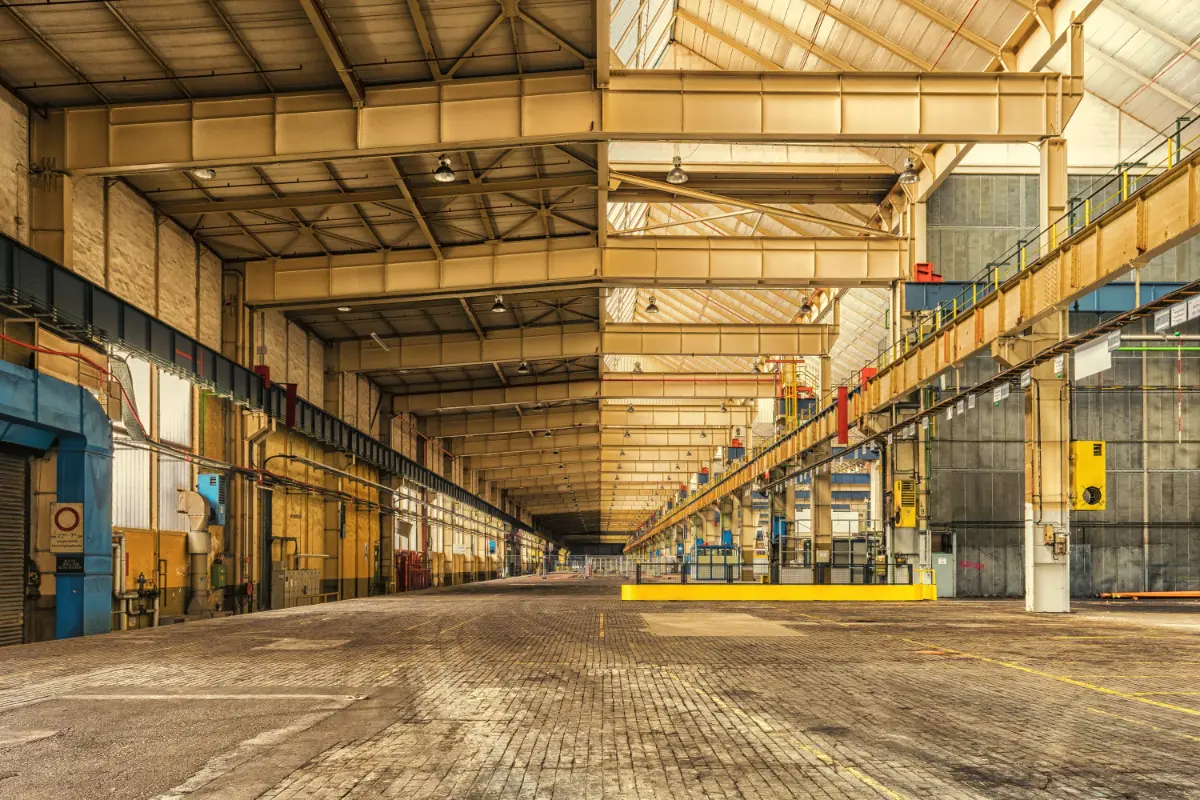
Manufacturing Facility Cleaning Requirements at a Glance
A general manufacturing cleaning program should address the following core areas. Not every item applies identically to every plant, but these are the questions a facility should be able to answer.
- Walking-working surfaces: Are floors, aisles, storerooms and work areas kept clean, orderly, sanitary and as dry as feasible?
- Leaks and spills: Is there a process for correcting or guarding hazards promptly?
- Chemical communication: Are hazardous cleaning and process chemicals covered by the plant’s HazCom program, labels, SDS access and training?
- PPE: Has the employer assessed cleaning tasks for eye, hand, foot, face and other PPE hazards?
- Machinery: Does cleaning require entry into a danger zone, guard removal or exposure to stored energy? If so, is the correct energy-control procedure used?
- Dust: Is ordinary dust distinguished from combustible or hazardous particulate?
- Waste and residue: Are debris, oily waste, process residue and cleaning wastewater handled according to the facility’s waste procedures?
- Production compatibility: Are cleaners, pads, brushes and methods compatible with floors, coatings, equipment exteriors and sensitive processes?
- Sector rules: Does the facility manufacture food, pharmaceuticals or another product category with specific sanitation or quality-system requirements?
- Contractor coordination: Are outside cleaners informed about restricted zones, chemicals, machine hazards, PPE and site procedures before they work?
A clean-looking factory can still have a poor cleaning program. Appearance does not prove that workers are protected from chemical exposure, hazardous energy, combustible dust, contaminated waste or sector-specific sanitation failures.
What OSHA Requirements Affect Manufacturing Facility Cleaning?
There is no single OSHA standard titled “manufacturing facility cleaning.” Instead, different standards apply depending on what the cleaning worker is exposed to.
29 CFR 1910.22
Walking-working surfaces must be maintained in a clean, orderly and sanitary condition. Workroom floors must be clean and, to the extent feasible, dry, while leaks, spills and other hazards must be corrected.
29 CFR 1910.1200
Hazard Communication can require a written program, hazardous-chemical inventory, workplace labeling, accessible Safety Data Sheets and employee information and training.
29 CFR 1910.132
Employers must assess the workplace for hazards that require PPE, select appropriate protection, communicate the selection and train affected employees.
29 CFR 1910.147
Lockout/tagout applies to covered servicing and maintenance where unexpected energization, startup or release of stored energy could injure workers—including some cleaning and unjamming tasks.
The site’s existing article on OSHA requirements for commercial cleaning owns the broader compliance query. This manufacturing guide applies those concepts to production environments and adds machinery, process dust and sector-specific sanitation.
What Is the Difference Between Housekeeping, Machine Cleaning and Sanitation?
Manufacturing facilities often use the word “cleaning” for work that carries very different risk.
| Type of work | Examples | Primary concern |
|---|---|---|
| Routine housekeeping | Sweeping, floor scrubbing, trash, restrooms, breakrooms, ordinary dust removal | Walking-surface safety, chemicals, PPE, traffic control |
| Production-area cleaning | Cleaning around work cells, exterior machine surfaces, staging zones | Production interaction, guarding, process contamination, site rules |
| Machine cleaning / servicing | Reaching into machines, removing guards, clearing jams or cleaning internal components | Hazardous energy and lockout/tagout |
| High-level cleaning | Beams, rafters, pipe exteriors, ducts, light fixtures and racking | Fall protection, access equipment, falling debris, process exposure |
| Hazardous-material cleanup | Unknown chemicals, significant spills, certain process residues | Hazard identification, emergency/spill procedures, specialized training |
| Regulated sanitation | Food-contact, pharmaceutical or validated production cleaning | Sector-specific GMP, sanitation or quality requirements |
These categories should not be blended into one line item called “factory cleaning.” A routine janitorial contractor may be qualified to scrub floors and maintain employee areas but not authorized to enter process equipment or handle an unknown chemical release.
What Are the Requirements for Floors, Aisles, Leaks and Spills?
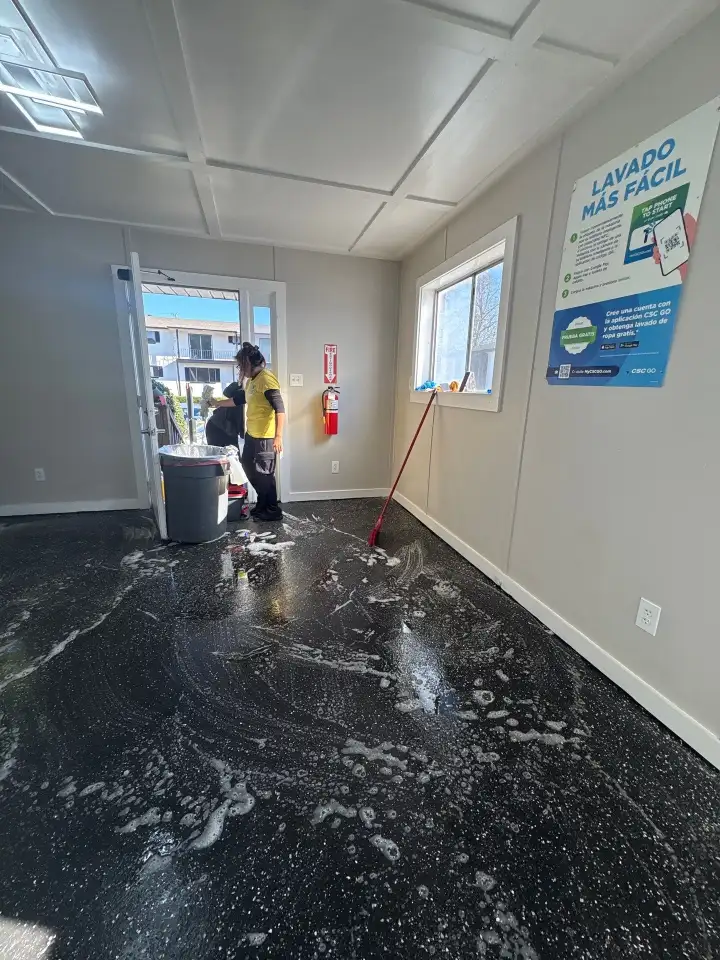
OSHA 1910.22 provides the baseline: places of employment and walking-working surfaces must be kept clean, orderly and sanitary; workroom floors must be clean and as dry as feasible; and surfaces must be kept free from hazards such as leaks, spills, corrosion and protruding objects.
For manufacturing plants, that translates into an active housekeeping process:
- inspect production aisles and walking routes regularly;
- remove scrap, packaging and loose debris before it becomes a trip or equipment hazard;
- address leaking equipment rather than repeatedly mopping underneath it;
- isolate wet-cleaning zones until the surface is safe for traffic;
- keep hoses, cords and cleaning equipment out of active travel lanes;
- separate unknown chemical spills from ordinary janitorial cleanup;
- document damaged floors, drains, joints or coatings for maintenance repair.
Machine scrubbing can be appropriate for compatible industrial floors, but the floor system and contamination still control the method. Mid City’s commercial floor cleaning page remains the service owner for floor-care work rather than this compliance article.
What Are the Requirements for Cleaning Chemicals in a Manufacturing Plant?
If employees may be exposed to hazardous chemicals, OSHA’s Hazard Communication Standard can apply. The employer must develop and maintain a written hazard communication program that explains how labels, Safety Data Sheets and employee training requirements are handled.
At a practical level, manufacturing cleaning programs should make sure:
- hazardous chemicals are included in the workplace chemical list where required;
- original and workplace containers carry compliant identification and hazard information;
- employees can access the applicable SDS during the work shift;
- workers understand chemical hazards and protective measures before exposure;
- secondary containers are handled under the plant’s labeling system;
- cleaners know which products must not be mixed;
- the selected cleaner is compatible with the surface, coating or equipment being cleaned;
- outside contractors understand relevant site chemical hazards and precautionary measures.
Manufacturing plants should also avoid treating the SDS as merely a binder on a shelf. Employees need access to the information and training to understand how it affects the task. The separate guide on what an SDS binder is covers document organization and access in more detail.
What PPE Is Required for Manufacturing Cleaning?
There is no universal PPE kit for every cleaner. OSHA 1910.132 requires the employer to assess the workplace for hazards that are present or likely to be present and select PPE that protects against those hazards.
Depending on the task, that assessment could lead to:
- chemical-resistant gloves for specific cleaning products;
- eye or face protection where splashes are possible;
- protective footwear where chemical, slip, puncture or impact hazards exist;
- protective clothing where contact with process residue is possible;
- head protection in areas with overhead hazards;
- hearing protection in active production areas when required under the site’s noise program;
- respiratory protection only when the applicable respiratory-protection requirements are satisfied.
The hazard assessment should be documented as required, and workers who must use PPE need training on when it is necessary, what equipment is required, how to wear it, its limitations and its proper care.
PPE is not a substitute for controlling the hazard. Machine guards, ventilation, isolation, substitution and other engineering or administrative controls may need to address the risk before PPE is considered the final protective layer.
When Does Machine Cleaning Require Lockout/Tagout?
This is one of the most important differences between ordinary janitorial cleaning and manufacturing cleaning.
OSHA’s lockout/tagout standard covers servicing and maintenance where the unexpected energization or startup of equipment—or release of stored energy—could injure the worker. OSHA explicitly includes certain cleaning and unjamming activities within the definition of servicing and maintenance.
A cleaner may enter lockout/tagout territory when the task requires actions such as:
- removing or bypassing a machine guard;
- reaching inside a point-of-operation or danger zone;
- cleaning blades, rollers, conveyors or moving components;
- clearing jams or stuck production material;
- working where gravity, pressure, electrical, hydraulic, pneumatic, thermal or mechanical energy could be released;
- performing cleaning that is effectively part of equipment servicing rather than external housekeeping.
When the standard applies, the employer needs an energy-control program, procedures, training and periodic inspection. Outside servicing personnel and the onsite employer must also inform each other of their respective lockout/tagout procedures.
A janitorial scope should never say “clean machinery” without defining the boundary. “Wipe approved exterior surfaces while equipment remains in a normal safe operating condition” is very different from “open guards and clean internal machine components.”
What Are the Cleaning Requirements for Dust in Manufacturing Facilities?
Dust should first be identified. Ordinary tracked-in dust and packaging debris may be managed through normal housekeeping. Combustible or hazardous process dust requires a different program.
OSHA’s combustible-dust guidance warns that deposits should not be allowed to accumulate and that facilities should minimize dust generation and dispersion. Casual compressed-air cleaning can be dangerous because it can suspend settled dust and create a dust cloud.
Where combustible dust is possible, the facility should establish approved methods based on its hazard assessment. That can include appropriately rated vacuum equipment, dust-collection systems, inspection intervals, controlled cleaning methods and procedures for hidden or elevated accumulation.
High surfaces matter because manufacturing dust does not stay on the floor. Beams, pipework, cable trays, ducts, lights and rack tops can accumulate material and later shed it back into production zones. The transactional service intent for that work belongs to high-bay dusting in Huntsville.

How Often Should a Manufacturing Facility Be Cleaned?
There is no universal OSHA rule saying that every manufacturing plant must be cleaned daily, weekly or monthly. Frequency should be sufficient to maintain the required safe condition and any product-specific sanitation standard.
A useful schedule separates work by trigger:
Immediate
Hazardous walking-surface conditions, spills, broken glass or sharp debris, significant leaks and contamination that cannot safely remain in place.
Shift-Based
Production debris, high-traffic floor zones, waste, staging areas and housekeeping tasks that rebuild during each production cycle.
Daily / Routine
Employee areas, restrooms, breakrooms, selected production support areas and scheduled floor care based on use.
Periodic
High dust, ledges, deep floor scrubbing, detail cleaning, low-use zones and work that needs a longer maintenance window.
Shutdown / Turnaround
Tasks requiring machine access, guards removed, deeper equipment cleaning or production downtime.
Regulated Frequency
Food-contact, pharmaceutical or other controlled-process sanitation performed according to the applicable regulation, procedure or validated program.
The interval should be shortened when inspection shows soil or residue reaching an unacceptable condition before the next scheduled clean. Cleaning frequency should follow actual load and risk, not a calendar chosen once and never revisited.
Do Food and Pharmaceutical Manufacturing Facilities Have Extra Cleaning Requirements?
Yes. A general manufacturing housekeeping plan is not enough for every regulated industry.
Food Manufacturing
Under 21 CFR 117.35, food plants must maintain buildings, fixtures and physical facilities in a clean and sanitary condition. Cleaning and sanitizing of utensils and equipment must protect against allergen cross-contact and contamination. Food-contact surfaces must be cleaned as frequently as necessary, and wet-process food-contact surfaces may require cleaning and sanitizing before use and after interruptions where contamination may have occurred.
The regulation also addresses safe cleaning and sanitizing compounds, toxic-material storage, pest control and the cleaning of non-food-contact equipment surfaces.
Pharmaceutical Manufacturing
Drug manufacturing facilities operate under current good manufacturing practice requirements that include sanitation of buildings used in manufacturing, processing, packing or holding drug products. Written procedures and assigned responsibility become part of the quality system rather than ordinary janitorial preference.
Other industries—such as medical devices, aerospace, electronics, chemical manufacturing or controlled environments—can have their own customer, quality, contamination-control or regulatory expectations. A general cleaning contractor should work to the facility’s approved procedure rather than inventing a substitute standard.
What Should an Outside Cleaning Contractor Be Responsible For?
The manufacturing company remains responsible for its workplace and regulatory obligations, even when cleaning is outsourced. A contractor should receive a clear scope and enough site information to perform assigned work safely.
Before work begins, define:
- approved areas and restricted areas;
- production versus non-production cleaning boundaries;
- machine exterior versus internal machine work;
- required PPE and site orientation;
- traffic and forklift rules;
- chemical approval and storage;
- waste and wastewater handling;
- lockout/tagout coordination where applicable;
- spill-response limits;
- combustible-dust or special particulate restrictions;
- food, quality or contamination-control requirements;
- inspection and sign-off expectations.
Mid City’s industrial cleaning service owns the local service intent and describes the kinds of floors, high surfaces, equipment exteriors, warehouse zones and employee areas that can be built into an industrial scope. This article remains the requirements guide.
What Cleaning Records Should a Manufacturing Facility Keep?
OSHA does not require one universal cleaning log for every manufacturing task, but documentation is useful—and specific standards or quality programs can require records.
Depending on the facility, useful records include:
- zone cleaning schedules and completion logs;
- walking-surface inspections;
- spill or leak corrective actions;
- chemical inventory and SDS access;
- HazCom training;
- PPE hazard-assessment certification;
- lockout/tagout procedures and applicable inspections;
- combustible-dust inspections and housekeeping records;
- cleaning chemical concentrations where the process requires control;
- food or pharmaceutical sanitation records where required;
- contractor work permits or sign-off;
- nonconformance and corrective-action records.
A good record should show more than “cleaned.” It should identify the area, task, frequency or trigger, responsible role, significant exceptions and corrective action. That gives safety, production, quality and facility-management teams a shared reference when conditions change.
Frequently Asked Questions About Manufacturing Facility Cleaning Requirements
Does OSHA require manufacturing facilities to be cleaned every day?
OSHA does not impose one universal daily-cleaning schedule for all manufacturing facilities. It requires workplaces and walking-working surfaces to be kept clean, orderly and sanitary, floors to be maintained clean and as dry as feasible, and hazards such as leaks and spills to be corrected. The facility should set frequencies that keep those conditions under control and meet any industry-specific rules.
What cleaning records should a manufacturing facility keep?
Records should match the facility’s hazards and quality system. Useful records can include scheduled housekeeping completion, spill response, machine or zone release, chemical and SDS information, PPE requirements, lockout/tagout coordination, dust inspections, corrective actions and specialty sanitation records where regulated.
Can a janitorial contractor clean manufacturing equipment?
Only when the scope, training, equipment status and safety procedures allow it. If cleaning exposes a worker to unexpected startup, energization or stored energy, OSHA’s lockout/tagout requirements may apply. A routine janitorial contractor should not enter machinery, bypass guards or perform equipment servicing without the required authorization and energy-control procedures.
What OSHA rules apply to cleaning chemicals in a manufacturing plant?
When employees are exposed to hazardous chemicals, OSHA’s Hazard Communication Standard can require a written hazard communication program, workplace labels, accessible Safety Data Sheets and employee information and training. PPE requirements depend on the hazard assessment and the actual chemical and task.
How should combustible dust be cleaned in a manufacturing facility?
Combustible dust requires hazard-specific housekeeping. OSHA guidance emphasizes preventing dust accumulation and avoiding cleaning methods that create dangerous dust clouds, including casual compressed-air blowdown. The facility’s dust hazard assessment and housekeeping program should determine approved tools, vacuums, frequencies and methods.
Do food and pharmaceutical manufacturing plants have extra cleaning requirements?
Yes. Food plants can be subject to FDA current good manufacturing practice sanitation requirements under 21 CFR Part 117, while drug manufacturing facilities have sanitation requirements under 21 CFR Part 211. These regulated environments need industry-specific sanitation procedures beyond ordinary industrial housekeeping.