Floors & specialty services
How to Clean Polished Concrete Floors in Commercial Spaces
Clean commercial polished concrete by removing dust and abrasive grit frequently, mopping or auto-scrubbing with a cleaner approved for the installed concrete treatment, and promptly lifting spills. Use soft pads or brushes, controlled water and a recovery system that does not leave residue. Avoid acidic cleaners, harsh abrasives and generic stripping-and-waxing routines: these can damage the appearance or protection of polished concrete. Maintenance frequency depends on foot traffic and soil, not a universal weekly treatment. If dullness remains after cleaning, have the installer assess whether the floor needs a guard refresh, honing or professional re-polishing rather than more aggressive detergent.
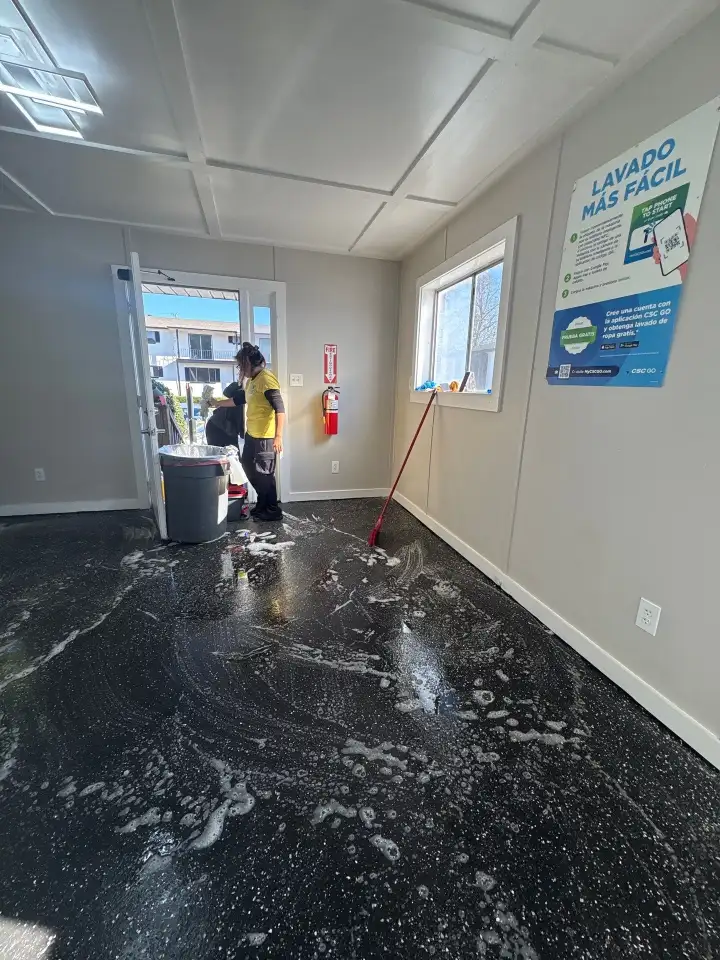
What Counts as Routine Polished Concrete Maintenance
Polished concrete retains its appearance through regular grit control and a cleaner compatible with the concrete’s densifier or protective guard. The goal of daily cleaning is soil removal, not rebuilding the mechanical polish each time.
A polished floor is not identical to epoxy-coated concrete or unsealed warehouse concrete. Determine which surface was installed before choosing chemicals, machine pads and any maintenance-restoration step.
Five Factors That Affect Polished Concrete Care
Protect the surface from grit
Despite its hardness, concrete can lose visual clarity when tracked sand acts like fine sandpaper. Entry mats and daily dust removal are often more important than occasional aggressive scrubbing. For a busy retail aisle, inspect the area nearest exterior doors and delivery routes as frequently as the heaviest traffic requires.
Use a neutral cleaner and suitable equipment
A neutral-pH product designed for polished concrete helps suspend soil without attacking many protective systems. Avoid assuming that an all-purpose degreaser is safe. An autoscrubber with a soft, nonabrasive pad and functioning recovery squeegee can handle open areas, while microfiber mops reach edges.
Manage stains before they set
Promptly recover coffee, oil, food spills and chemicals using an appropriate technique. Acidic liquids may etch rather than simply stain. If the discoloration survives a normal cleaning trial, consider a flooring specialist instead of repeatedly increasing chemical strength.
Know the difference between polished and coated concrete
A mechanically polished floor might have a guard or penetrating treatment, while another slab may have an epoxy or acrylic coating. These systems have different cleaning and repair requirements. Ask for the original finish record; do not infer the system from shine alone.
Plan periodic restoration carefully
If a clean concrete floor appears hazy or loses reflection only in traffic routes, the solution may involve specialist refinishing or guard maintenance. Routine janitorial buffing is not automatically appropriate. Compare the proposed treatment with the floor installer’s guidance and test an inconspicuous zone.
For operational planning, related reading includes commercial hard-floor cleaning services and maintenance for epoxy-coated floors. Those pages address adjacent questions rather than replacing the specific guidance here.
Polished concrete maintenance by condition
| Surface condition | Appropriate next action | Avoid |
|---|---|---|
| Loose grit from foot traffic | Dust mop or vacuum before wet cleaning | Dragging abrasive debris over the slab |
| Routine dirt and tracked-in spills | Use approved neutral cleaner and promptly recover liquid | Harsh chemicals and excess standing water |
| Persistent dull patches or etching | Request diagnosis of finish or guard condition | Assuming more detergent will restore lost polish |
Step-by-Step Commercial Polished Concrete Cleaning
The following routine separates dry grit removal, approved wet cleaning and diagnosis of damage or lost shine.
- Inspect floor type and finish. Locate any warranty, polishing grit specification, guard product and chemical restrictions.
- Protect entry points. Use and clean walk-off mats to catch grit before it reaches the concrete.
- Dust-remove first. Use a clean microfiber dust mop, covering corners and behind obstacles.
- Apply approved neutral cleaner. Dilute as directed and allow the specified dwell time without letting solution dry on the surface.
- Recover liquid promptly. Use a clean mop or autoscrubber and change dirty solution rather than redistributing it.
- Inspect dry surface. Look for etched patches, stubborn oily residues, and dull traffic lanes; escalate non-cleaning defects.
How Methods Change Across Commercial Environments
These property examples distinguish routine soiling from actual surface or guard damage.
Retail showroom with reflective concrete
Illustrative scenario: the entrance loses shine while protected display areas remain bright. Increasing abrasive scrubbing would be counterproductive. Improve walk-off coverage, dust removal and ask whether the polished guard needs specialist maintenance.
Warehouse office and loading transition
Illustrative scenario: fine grit tracks from a loading area into a concrete corridor. Frequent dry-soil removal and separating dirty carts from the hallway may outperform an occasional chemical-intensive deep clean.
Coffee spill leaves pale mark
If the liquid etched a surface treatment, cleaner cannot reliably restore reflection. Document the incident and request an assessment of the polishing or guard system.
Common Mistakes That Dull Polished Concrete
Polished concrete is durable but not chemically invulnerable. Poor pad choice, abrasive grit or incorrect chemistry can create more work than the initial soil condition.
- Applying VCT wax automatically: Polished concrete is not the same finish system as traditional VCT; unnecessary coatings change upkeep.
- Using acidic descalers: Acids can etch susceptible surface treatments or concrete. Select the least aggressive approved chemical.
- Letting dirty water dry: Residue causes haze and can obscure true surface defects. Recover and rinse according to product guidance.
Questions to Ask Before Hiring a Floor Cleaner
Ask whether the surface is mechanically polished, sealed, densified, dyed or coated. Request the installer’s approved daily-cleaner instructions and pad selection, plus a test showing that proposed treatment neither etches nor clouds the floor.
For persistent stains or loss of shine, get a written distinction between cleaning, protective-treatment refresh and mechanical re-polishing. These are different deliverables with different equipment, cost and downtime.
Cleaning Versus Re-Polishing: How to Diagnose Lost Concrete Shine
A floor may look dull for three different reasons: loose grit obscures the surface, cleaning chemical residue leaves a haze, or mechanical wear has changed the concrete’s actual polish. The first two may improve after approved cleaning and thorough recovery; the third may require a flooring specialist. Test and compare a small protected section before describing every cloudy patch as a permanent stain.
PROSOCO’s finished-concrete maintenance guidance emphasizes matching the cleaner to the densifier or guard system and using suitably gentle pads in automatic scrubbers. Some concrete-specific cleaners are formulated at a mildly alkaline pH; a claim that every suitable concrete product must be exactly pH 7 would be misleading. Follow the installed system’s written instructions rather than a universal chemical rule.
A high-gloss showroom with constant grit from an entrance will need more frequent dust removal than an interior storage area. By contrast, an oil spot from equipment requires a targeted stain procedure rather than simply repeating neutral daily floor cleaner. Track these categories separately on inspection sheets to avoid overusing restorative products.
Frequently Asked Questions
Can polished concrete be mopped every day?
Yes, if traffic requires it and the cleaning system is compatible. Dust removal may be daily while damp cleaning varies by soil.
Should you strip and wax polished concrete?
Generally not as a standard process. Verify whether a special topical coating was installed before recommending any coating treatment.
Why does polished concrete look cloudy?
Possible causes include cleaner residue, fine abrasion, chemical etching or guard wear. Diagnose before applying stronger products.
When Cleaning Alone Will Not Restore the Finish
Grit control and appropriate cleaning chemistry are the primary maintenance tools. Treat ongoing dullness as a diagnostic issue: establish whether the surface has residue, a failed guard or actual abrasion before buying a restoration service.
For further planning, review warehouse floor maintenance practices or request a site-specific cleaning assessment. These related resources support implementation without changing this page’s primary search intent.
Sources and Practical Limitations
Technical guidance cited below should be applied alongside the instructions for the specific installed material, contractor safety plan and any applicable local requirements.