Industry-Specific Cleaning Guide
Church Cleaning Services: What to Expect Before You Hire
When you hire church cleaning services, expect more than vacuuming a sanctuary once a week. A professional provider should begin with a walkthrough, identify how the building is actually used, separate high-traffic areas from low-use rooms, document what is included, agree on service days around worship and events, define restroom, nursery, fellowship-hall and floor-care responsibilities, and set a process for inspections and missed tasks. You should also know what is excluded. Specialty floor restoration, carpet extraction, post-event deep cleaning, biohazard response, exterior work and enhanced disinfection may need separate approval rather than being included automatically in the recurring janitorial price.
The best church cleaning plan follows the ministry calendar, not just the building’s square footage. Sunday worship, midweek programs, childcare, funerals, weddings, choir rehearsals, community meals and seasonal events can create very different cleaning demands from one week to the next. A useful contract therefore combines a predictable core scope with a clear way to handle event-driven work.
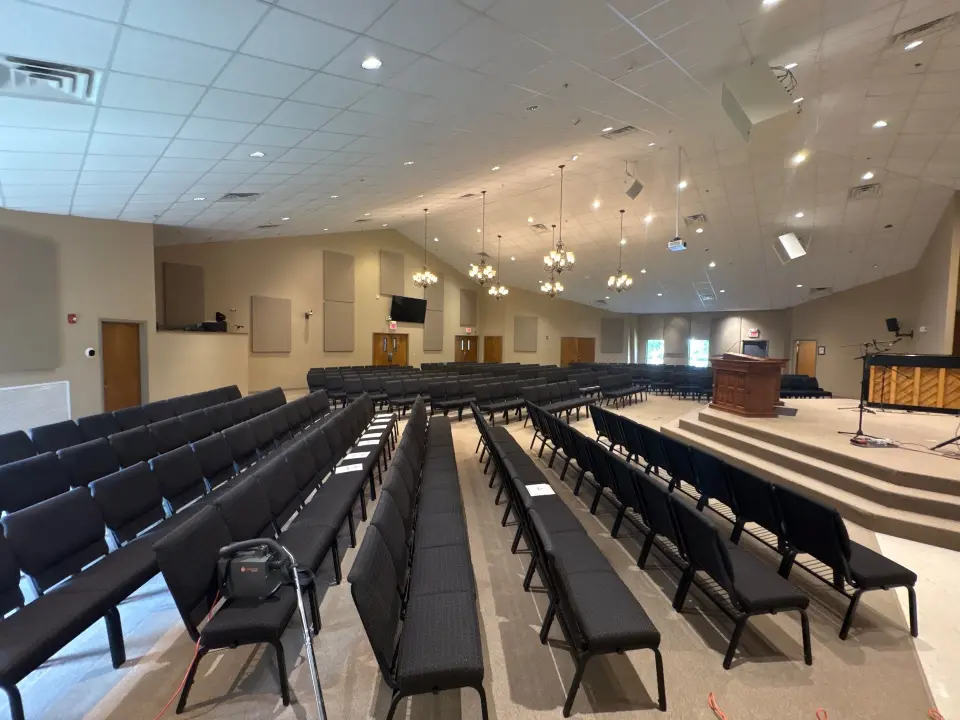
What Should Happen During the First Church Cleaning Walkthrough?
A professional church cleaning quote should normally start with a site walkthrough. Churches are difficult to price accurately from square footage alone because two buildings of the same size can have completely different patterns of use.
During the walkthrough, expect the cleaning company to ask about:
- Weekly attendance and peak traffic. A 500-seat sanctuary used once a week behaves differently from a smaller building active seven days.
- Service and event calendar. Sunday services, Wednesday programs, funerals, weddings, meetings and community events affect the cleaning route.
- Nursery and children’s spaces. These areas usually need different touchpoint, floor and sanitation priorities from adult classrooms.
- Restroom count and usage. Public restrooms often create more recurring labor than low-use offices or storage rooms.
- Flooring mix. Carpet, tile, VCT, LVT, hardwood and entrance matting all require different routine and periodic care.
- Fellowship and food-service areas. Kitchens, coffee stations and meal spaces create crumbs, spills, grease and waste that may not exist in the sanctuary.
- Access and security. Keys, alarms, door schedules, locked offices and restricted rooms need to be documented.
- Storage and supplies. Decide who provides liners, paper goods, soap and cleaning consumables and where chemicals and equipment may be stored.
- Special surfaces. Historic wood, instruments, screens, sound equipment and decorative finishes may need exclusions or specific instructions.
A vague walkthrough usually produces a vague contract. The goal should be a room-by-room understanding of what gets cleaned, how often, and what requires separate authorization.
What Is Usually Included in Church Cleaning Services?
Recurring church janitorial service typically focuses on keeping occupied areas ready for members, visitors, staff and ministry programs. The exact scope varies, but common tasks include:
Sanctuary & Worship Areas
Vacuuming or mopping floors, removing visible dust, spot-cleaning touchpoints, emptying waste and returning the space to a ready condition without disturbing equipment or ministry materials.
Restrooms
Cleaning toilets, urinals, sinks, counters, mirrors and floors; replenishing agreed consumables; removing trash; and addressing high-touch fixtures.
Entries & Lobbies
Cleaning glass touchpoints, vacuuming or mopping traffic lanes, removing tracked-in soil and keeping the first public-facing areas presentable.
Classrooms & Meeting Rooms
Trash removal, floor care, table and chair surface cleaning where included, dusting and reset tasks based on room use.
Fellowship Halls
Floor cleaning, trash removal, table-area cleanup and post-event reset according to the agreed service window.
Administrative Areas
Routine office-style cleaning for workspaces, conference rooms, corridors and staff restrooms while respecting desks, papers and locked areas.
The important word is agreed. A contractor should not promise “complete church cleaning” and leave the actual work undefined. A written commercial cleaning scope of work makes it easier to compare providers and resolve missed-task questions later.
What Should You Expect in Different Areas of a Church?
A church is usually several facility types combined into one property. Treating every room the same wastes labor in low-use areas and under-cleans the zones that actually drive complaints.
| Church area | Typical recurring priorities | Common scope question |
|---|---|---|
| Sanctuary | Vacuuming/mopping, dust control, visible touchpoints, waste, aisle appearance | Are pews, chairs, platforms and stage areas included every visit or rotated? |
| Lobby / narthex | Entry soil, glass, doors, mats, hard floors, visible fingerprints | Does the scope include interior glass and entry mat maintenance? |
| Restrooms | Fixtures, mirrors, floors, waste, touchpoints, consumables | Who supplies toilet tissue, soap, liners and paper towels? |
| Nursery | Floors, touchpoints, waste and agreed child-area surfaces | Which toy, crib or childcare sanitation tasks remain with church staff? |
| Classrooms | Floors, trash, tables/chairs where included, dusting | Are rooms cleaned after every use or only on scheduled service days? |
| Fellowship hall | Floors, tables, waste, spills and post-event reset | Are weddings, meals and special events included in the base scope? |
| Kitchen / coffee area | Floors, exterior surfaces, waste, sinks/counters if agreed | Who handles dishes, appliances, food-contact sanitation and grease-heavy work? |
| Church offices | Vacuuming, trash, accessible surfaces, restrooms | What should cleaners avoid moving on desks or in pastoral offices? |
For larger campuses, zoning also helps control cost. Main entrances, public restrooms and the sanctuary can stay in a core route, while storage rooms, secondary classrooms and low-use offices rotate at a lower frequency.
How Often Should a Church Be Professionally Cleaned?
There is no universal church-cleaning frequency. The correct schedule depends on attendance, building use and what church staff or volunteers already handle.
A congregation with one Sunday service and limited weekday use may not need the same frequency as a church with preschool programs, staff offices, evening ministries and frequent community events. Some facilities need multiple visits per week; others may use one recurring visit plus event-specific cleaning.
A better way to set frequency is by zone:
- High-traffic public areas: entries, restrooms, main corridors and gathering spaces usually need the most consistent attention.
- Worship areas: schedule around the number of services, rehearsals and events.
- Children’s areas: increase cleaning based on program frequency and the church’s childcare sanitation procedures.
- Offices: lower traffic may justify a lighter recurring schedule than public areas.
- Unused classrooms: clean when used, with periodic dusting rather than treating every room as a daily-use space.
- Fellowship halls: frequency may be calendar-driven because meal events can create large short-term cleaning loads.
A useful contract can have two layers: a core recurring schedule for predictable spaces plus a defined event-cleaning rate or procedure for weddings, funerals, conferences, holiday programs and community meals.
How Is Church Cleaning Different From Ordinary Office Cleaning?
Churches and offices share basic janitorial needs—restrooms, floors, trash, dust and touchpoints—but their usage patterns are different.
An office often has relatively stable weekday occupancy. A church may be almost empty on Monday and host hundreds of people on Sunday. One room can function as a classroom, meeting space and event room within the same week. Volunteer groups may move furniture. Food may be served occasionally rather than every day. Children’s ministry can add sanitation needs that do not exist in most offices.
That variability changes staffing and routing. The cleaning provider should know not only the building but also the calendar. If a Saturday wedding ends at 9 p.m. and Sunday service begins at 8 a.m., the church needs a documented reset plan rather than assuming the ordinary Tuesday/Friday route will somehow cover it.
For congregations that simply need recurring building maintenance without a church-specific buying guide, Mid City’s commercial janitorial services page owns the broader service intent.
What Should You Expect Around Worship Services and Special Events?
Event scheduling is one of the biggest differences between church cleaning and ordinary commercial janitorial work. Ask how the cleaning company handles short-notice changes and whether event resets are included, capped or billed separately.
A typical post-event reset may include:
- trash and recycling removal;
- restroom cleaning and restocking;
- vacuuming or mopping traffic areas;
- spot treatment for visible spills;
- entry glass and door touchpoints;
- fellowship-hall floors;
- table and chair area cleanup where included;
- returning common areas to their normal layout if that responsibility is specifically assigned.
Do not assume furniture setup, chair stacking, kitchen dishwashing, decoration removal or audiovisual cleanup are part of janitorial service. Those are exactly the tasks that create friction when neither side wrote them into the scope.

Should Church Cleaning Services Disinfect Everything Every Visit?
No. Routine church cleaning should not automatically mean applying disinfectant to every surface on every visit.
CDC’s community-facility guidance says regular cleaning of surfaces helps reduce germs and that high-touch surfaces should be cleaned regularly. Additional disinfection is particularly useful where someone has obviously been ill, where risk is elevated or when public-health authorities recommend it. Surfaces should be cleaned before disinfecting because dirt and other impurities can reduce the disinfectant’s effectiveness.
If a disinfectant is used, EPA requires the product to be used according to its label. That includes the approved surface and use site, dilution or application directions, and the required contact time—the period the surface needs to remain visibly wet for the product to work as labeled.
For a church, this means the cleaning plan should distinguish ordinary soil removal from targeted disinfection. Restroom touchpoints, nursery areas and illness-related cleanup may justify different procedures from pew backs, walls or low-touch decorative surfaces.
If the church needs a separate enhanced treatment rather than ordinary recurring janitorial work, the sanitizing and disinfection service should remain a distinct scope instead of being implied in every routine visit.
What Should Quality Control Look Like for Church Cleaning?
Quality control should be simple enough that church staff can actually use it. A long checklist does not help if nobody knows who receives complaints or how missed work is corrected.
Expect a professional arrangement to define:
- Primary contact: one church representative and one cleaning-company contact whenever possible.
- Inspection method: periodic walkthroughs, supervisor checks, digital inspections or another documented system.
- Priority areas: the spaces that should be checked first after every visit, such as restrooms and entrances.
- Issue reporting: a clear way to report missed work, supply shortages or damage.
- Correction window: what happens when a task is missed and whether urgent issues can be corrected before the next service.
- Scope changes: how a new ministry program, classroom or event schedule gets added to the contract.
Candidly, a church should expect an adjustment period when a new cleaning provider starts. The first few visits reveal traffic patterns, locked rooms, event habits and details that may not have been obvious during the walkthrough. What matters is whether those discoveries are documented and incorporated into the service plan rather than becoming recurring excuses.
What Affects the Cost of Church Cleaning Services?
Church cleaning cost should not be estimated from square footage alone. A reliable quote usually considers the labor required to keep the actual occupied zones ready.
Important pricing variables include:
- total cleanable square footage;
- number and size of restrooms;
- weekly service frequency;
- number of worship services and events;
- sanctuary seating configuration;
- amount of carpet versus hard flooring;
- nursery and classroom use;
- kitchen and fellowship-hall activity;
- trash volume;
- interior glass and entry doors;
- consumable restocking responsibility;
- access restrictions and alarm procedures;
- periodic floor or carpet work;
- special-event resets.
A lower quote is not automatically a better value if it excludes the work the church actually needs. Compare proposals line by line. If one contractor includes all public restrooms and event resets while another includes only sanctuary vacuuming and trash, the prices are not describing the same service.
Floor restoration should also be separated from routine maintenance. If a church has worn VCT, heavily soiled tile or other specialty floor needs, those belong under a dedicated commercial floor-cleaning scope rather than being silently folded into basic janitorial pricing.
What Questions Should a Church Ask Before Hiring a Cleaning Company?
Use the walkthrough to get concrete answers instead of broad assurances. Ask:
- Which rooms and surfaces are included on every visit?
- Which tasks are rotated weekly, monthly or periodically?
- Are Sunday or event resets included in the base agreement?
- How are nurseries and children’s areas handled?
- Who supplies restroom paper products, soap and trash liners?
- Are cleaning products stored onsite or brought in each visit?
- How are keys, door codes and alarms managed?
- Are cleaners allowed in pastoral offices, finance rooms or other restricted areas?
- What happens if a room is locked or occupied during the scheduled service?
- How are damage, maintenance issues or unusual conditions reported?
- What floor-care tasks are routine, and which are specialty services?
- How are funerals, weddings and short-notice events priced?
- What is excluded from the agreement?
- Who inspects the work?
- How quickly are missed tasks corrected?
The most useful question is: “Can you show us exactly what your crew will do in each area and how often?” If the answer stays vague, the proposal is not yet specific enough.
Church Cleaning Services: What Should You Expect Overall?
You should expect a church cleaning company to understand the building before pricing it, define the scope in writing, schedule around ministry activity, focus labor where people actually use the facility, protect sensitive spaces and surfaces, communicate problems, and provide a repeatable quality-control process.
You should not expect a generic package to anticipate every funeral, wedding, children’s event, meal or seasonal program. The strongest arrangement has a predictable recurring core plus a clear process for exceptions.
For churches in the Huntsville-area that want to discuss the facility itself, Mid City Commercial Cleaning can review the building, schedule and priority areas through its commercial cleaning walkthrough and quote process.
Frequently Asked Questions About Church Cleaning Services
What is normally included in church cleaning services?
Typical recurring work includes sanctuary floor care, trash removal, restrooms, entries, hallways, classrooms, meeting rooms and common areas. Fellowship halls, kitchens, nurseries, interior glass, consumables and event resets should be specifically defined because contractors may scope them differently.
How often should a church be professionally cleaned?
There is no universal frequency. It depends on attendance, worship schedule, weekday programs, children’s ministry, staff occupancy, events and how much cleaning church staff or volunteers already perform. Many churches benefit from a core schedule plus extra service after high-use events.
Are weddings and funerals included in regular church cleaning?
Not necessarily. Ask whether special-event preparation and post-event resets are included in the recurring price, available as an add-on, or quoted separately. This should be decided before an event rather than after the cleaning is needed.
Should a church cleaning company disinfect every surface?
No. Routine cleaning is appropriate for many surfaces. CDC recommends regular cleaning of high-touch surfaces and additional disinfection when illness or higher risk justifies it. When disinfectants are used, the EPA-approved label directions and contact time should be followed.
Does church cleaning include nursery toys and childcare items?
Only if the scope specifically assigns those tasks to the cleaning company and defines the correct method. Churches should not assume a janitorial crew is responsible for toy sanitation, crib-related procedures or childcare program requirements unless those duties are documented.
What should a church compare between cleaning quotes?
Compare the actual scope, frequency, restrooms, sanctuary tasks, event coverage, floor care, consumables, access requirements, quality-control process and exclusions. Two quotes with different task lists are not directly comparable even if both are labeled “church cleaning.”