Decatur, Alabama · Morgan County · Commercial Tile & Grout
Tile Floor Cleaning in Decatur, AL
Commercial tile floor cleaning in Decatur, AL deep-cleans ceramic, porcelain and quarry tile and grout in restaurants, offices, clinics and other facilities. A suitable service removes loose grit, uses surface-compatible chemistry, agitates soiled grout, recovers dirty solution and dries the floor before normal traffic resumes. Mid City Commercial Cleaning offers site-specific tile floor cleaning based on the material, buildup, access and business hours. This is deeper than routine mopping and different from stripping and waxing vinyl composition tile (VCT).
Dark grout in a downtown dining room, greasy quarry tile behind a cooking line, and tracked-in soil at a Beltline Road storefront create different cleaning challenges. We evaluate the floor before recommending the right method rather than treating all hard surfaces alike.
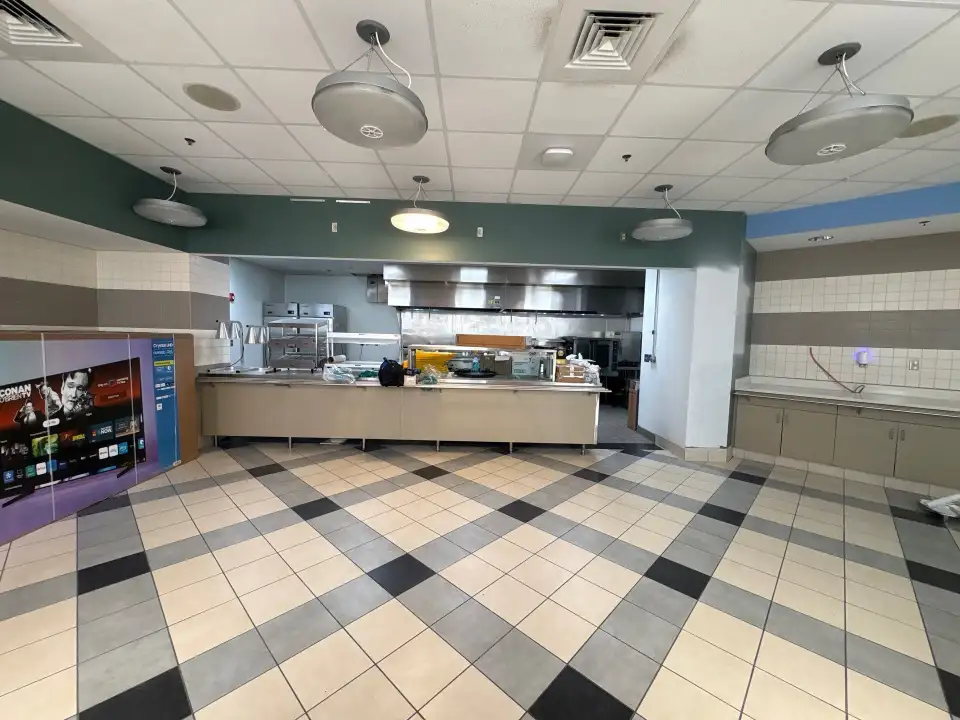
A focused floor-care service
What Does Professional Tile Floor Cleaning Include?
Commercial tile can look clean from standing height while soil remains in textured surfaces, grout joints, corners and equipment edges. Regular mopping manages everyday spills, but repeated use of dirty mop solution can leave a film. A deep clean goes beyond the exposed face of the tile to address these harder-to-reach areas.
A typical assessment looks at the type of tile, grout condition, existing coatings, floor drains, foot traffic, grease deposits and how soon employees or customers must use the space again. Equipment and cleaning agents should be chosen only after those conditions are understood. The aim is to remove soil effectively without unnecessarily abrading tile, weakening grout, leaving residue or creating an avoidable wet-floor hazard.
Important limitation: Cleaning can remove many surface deposits but cannot guarantee restoration of permanently stained grout, etching, cracked tile or failed grout joints. Those problems may need repairs, stain assessment or specialist restoration before a safe cleaning specification is possible.
How the work is planned
Our Decatur Commercial Tile and Grout Cleaning Process
A practical workflow based on floor condition—not a promise to use the same pressure, temperature or detergent in every building.
01 / INSPECT
Identify the Surface
Review tile and grout type, loose joints, finishes, drains, equipment, slip-sensitive routes and sensitive adjoining surfaces. Confirm what can be moved and what cannot.
02 / PREPARE
Remove Dry Debris
Lift grit and loose material before wet work. Protect nearby fittings, choose compatible chemistry, test an inconspicuous area and arrange safe access controls.
03 / CLEAN
Agitate and Recover
Apply cleaner at an appropriate dilution and dwell time, scrub grout and tile using suitable tools, then remove soil-bearing liquid rather than letting it settle back.
04 / HAND BACK
Rinse and Dry
Rinse when required by the product, recover remaining moisture, detail edges, inspect the result and reopen the area only when appropriate for foot traffic.

Why the recovery stage matters
Grout is often lower than the surrounding tile face, so loosened dirt can collect in the joints. Brushing without extracting or recovering dirty water may move that soil rather than remove it. For compatible installations, a wet-vacuum or suitable floor-recovery system can help lift the suspended grime away.
That is consistent with the Tile Council of North America's published guidance on cleaning cementitious grout: compatible cleaner, mechanical cleaning where needed, and removal of the dirty solution followed by rinsing. No cleaning method can compensate for damaged grout or an incompatible chemical.
Correct surface, correct method
Commercial Tile Types We Assess in Decatur
“Tile floor” is not a single material. A restaurant kitchen and a polished office lobby may require completely different pads, brushes and chemicals. We confirm surface compatibility before proposing work, especially when an installation has been previously sealed or treated.
Quarry Tile
Often selected for food-service areas because of its textured surface. Grease, food soil, drain edges and grout can demand detailed cleaning. Aggressive chemistry should never be assumed safe without a floor-system check.
Ceramic Tile
Common in restrooms, entryways and commercial service areas. Attention to grout joints and complete rinsing matters as much as the visible tile surface.
Porcelain Tile
Frequently used in higher-traffic lobbies and retail interiors. Polished, textured and glazed finishes can require different cleaning pressure and tool choices.
Natural stone, terrazzo, sealed specialty flooring and damaged installations should be assessed separately. Some stones are acid-sensitive; a method suitable for one tile type can be harmful to another. Likewise, vinyl composition tile is not ceramic tile and may require a separate restorative process.
Material-specific guidance: Daltile recommends removing loose soil before mopping, using products safe for both the tile and grout, rinsing away residues and matching brushes or autoscrubbers to the finish. Its ceramic and porcelain care guide is a useful technical reference; the installed floor manufacturer's instructions take precedence.
A common reason to book
Why Do Grout Lines Stay Dark Even After Mopping?
Cement-based grout can be porous and its surface often sits below the tile. Food oils, dust, tracked-in soil and cleaning residue may collect there even when the adjacent tile looks acceptable. Repeated damp mopping can leave the joints visibly darker because the dirty solution is not fully recovered.
Professional grout cleaning aims to loosen deposits with compatible chemistry and targeted agitation before recovering the dirty water. Dark joints do not always indicate removable dirt: original grout color variation, deep staining, deterioration and moisture intrusion may also affect appearance. We would not promise that every joint returns to a uniform pale color after cleaning.
For some cementitious grout installations, sealing after thorough cleaning and drying may help reduce future absorption. Whether sealing is suitable depends on the grout and product specification; epoxy grout and certain pretreated joints behave differently. Sealing is a separate scope item, not an automatic part of every tile-cleaning visit.
Built around your premises
Tile Cleaning Plans for Decatur Businesses
Decatur's commercial areas are not interchangeable. A Bank Street café may need a dining room and kitchen cleaned after closing, while a Beltline Road retail location may need entrances and customer routes managed in sections. Facilities near 6th Avenue may have front-of-house presentation needs; production-adjacent offices and break rooms can face grit carried in from external work areas.
These are examples of different planning situations—not claims that Mid City has cleaned particular addresses. A walkthrough determines the actual surface, traffic pattern and available cleaning window before a scope is agreed.
Restaurants and Cafés
Grease-prone quarry tile, seating areas, restroom floors, wall-edge cove tile and entries need a coordinated cleaning window. If you also require tables, food-contact-area housekeeping or other whole-premises tasks, see our restaurant cleaning options for Decatur.
Offices and Retail
Porcelain or ceramic entrances, lobby grout, waiting areas and corridor intersections can show dark traffic lanes. Short, staged sections may preserve access more effectively than treating a whole site at once.
Clinics and Shared Facilities
Reception areas, staff rooms and restroom tile may require coordination with appointment schedules, privacy requirements and facility-approved supplies. Floor deep cleaning should not be represented as validated infection-control disinfection without a separate protocol.
How a staged job could work
Illustrative example, not an estimate: For a 2,400-square-foot tiled facility, a manager might divide access into three 800-square-foot zones so one section remains available while another is cleaned and dried. Whether that works depends on furniture, doors, shared corridors and the amount of buildup.
The same square footage can take significantly different effort in a lightly soiled lobby versus a textured kitchen with greasy grout. We recommend scheduling from the actual floor assessment rather than promising a fixed time based only on area.

Choosing the right service
Tile Deep Cleaning vs. Routine Mopping vs. Strip and Wax
Booking the wrong floor service can waste money or damage the finish. These procedures have different goals and should not be marketed as interchangeable.
| Service | Best suited to | What it does not replace |
|---|---|---|
| Routine mopping | Day-to-day dust and light spills on compatible tile | Embedded grout cleaning or heavy grease recovery |
| Commercial tile and grout deep cleaning | Soiled ceramic, porcelain or quarry tile and accessible joints | Cracked-tile repair, regrouting or every type of stain removal |
| Floor stripping and waxing | Compatible resilient flooring and existing floor-finish systems, commonly VCT | Routine ceramic or porcelain tile cleaning |
If your site has multiple hard-floor materials and needs a broader program, our general commercial floor cleaning in Decatur is the appropriate starting point. When a worn VCT finish needs restoration rather than tile grout treatment, review our Decatur strip-and-wax floor services.
Costs, frequency and expectations
How Much Does Commercial Tile Cleaning Cost in Decatur?
A useful quote is based on more than square footage. Two areas of the same size can have very different labor, chemistry, drying and equipment needs. We have not published a verified fixed Decatur price or a universal per-square-foot rate; a number offered without seeing the floor would risk being misleading.
For an accurate scope, we ask for the floor location and approximate area; tile and grout type if known; photographs of the hardest-hit sections; the presence of grease, coatings or stains; movable equipment; accessible water and power; and preferred hours. We also clarify whether the work is a one-time reset or part of a recurring maintenance program.
How often is deep cleaning needed? There is no mandatory interval that fits every site. A high-volume kitchen may need more frequent restorative attention than a lightly used lobby. Establish a schedule from soil recurrence, inspections, the floor manufacturer's care guidance and the facility's own housekeeping plan. Routine daily maintenance continues between deep-cleaning visits.
When can people walk on the floor? Only after it has been appropriately rinsed where necessary, moisture has been recovered and the area is safe for normal use. Drying time varies with ventilation, texture, floor condition and weather; it is not a blanket guarantee. OSHA's walking-working surfaces rule (29 CFR 1910.22) addresses clean, orderly conditions, feasible dryness and hazard control in workplaces.
Clear answers before you book
Decatur Tile Floor Cleaning FAQs
What types of commercial tile can you clean in Decatur?
Common candidates include ceramic, porcelain and quarry tile, along with compatible grout joints. The cleaning method depends on the manufacturer, tile texture, grout material, coatings and existing damage. Natural stone and specialty surfaces require a separate assessment.
Can professional cleaning remove dark grout lines?
Often it can remove embedded surface soil and greasy residue, but it cannot reverse every stain or restore missing grout. Permanent discoloration, deteriorated grout or moisture-related problems may require repair or specialist treatment.
Can tile floors be cleaned after business hours?
Scheduling can be discussed for evenings, early mornings or other low-traffic periods. The feasible window depends on square footage, furniture and equipment access, soil load, noise restrictions and the time needed for the floor to dry.
Do restaurant kitchen floors need a different method?
Frequently, yes. Quarry tile, cooking grease and slip-resistant texture can require compatible degreasing and agitation, followed by dirty-water recovery and rinsing. Cleaner selection must suit the tile and grout, and food-service areas need site-specific access and safety planning.
Do you strip and wax ceramic or porcelain tile?
Not as a standard tile-cleaning procedure. Stripping and waxing is primarily associated with compatible resilient floor finishes such as VCT. Ceramic and porcelain generally need an appropriate tile-and-grout cleaning method, not routine application of floor wax.
How much does tile floor cleaning cost in Decatur, AL?
A reliable quote depends on cleanable square footage, grout condition, accumulated grease or residue, access, the number of treatment passes, and scheduling. A walkthrough or clear site information is more useful than a generic per-square-foot figure that ignores these differences.
Ready to plan the work?
Request Tile Floor Cleaning in Decatur, AL
Tell us what type of tile you have, where the floor is located, approximately how large the area is, and when cleaning can happen. We'll discuss the site conditions and a tailored scope before making a recommendation.
Call 256-809-0407 or use the quote button above. Service timing and scope are subject to availability and a site assessment.
Technical guidance referenced
Tile Council of North America: grout cleaning and dirty-water recovery; Daltile: ceramic and porcelain care, rinsing and compatible chemicals; OSHA: workplace walking-working surface conditions. These references support general cleaning principles and do not replace the installed flooring manufacturer’s instructions or a site-specific risk assessment.