Janitorial Services · Service Comparison Guide
Janitorial vs Commercial Cleaning: What’s the Difference?
Janitorial cleaning usually means recurring maintenance that keeps a building usable day to day, while commercial cleaning is the broader category of professional cleaning for business properties. Janitorial work often includes trash removal, restroom cleaning, routine vacuuming, mopping, and supply checks. Commercial cleaning can include those same tasks plus project work such as carpet extraction, floor refinishing, post-construction cleanup, or detailed cleaning of specialized facilities. The terms overlap, and many cleaning companies use them interchangeably. The meaningful difference is the written service scope, frequency, equipment and skill required—not the label printed on a proposal.
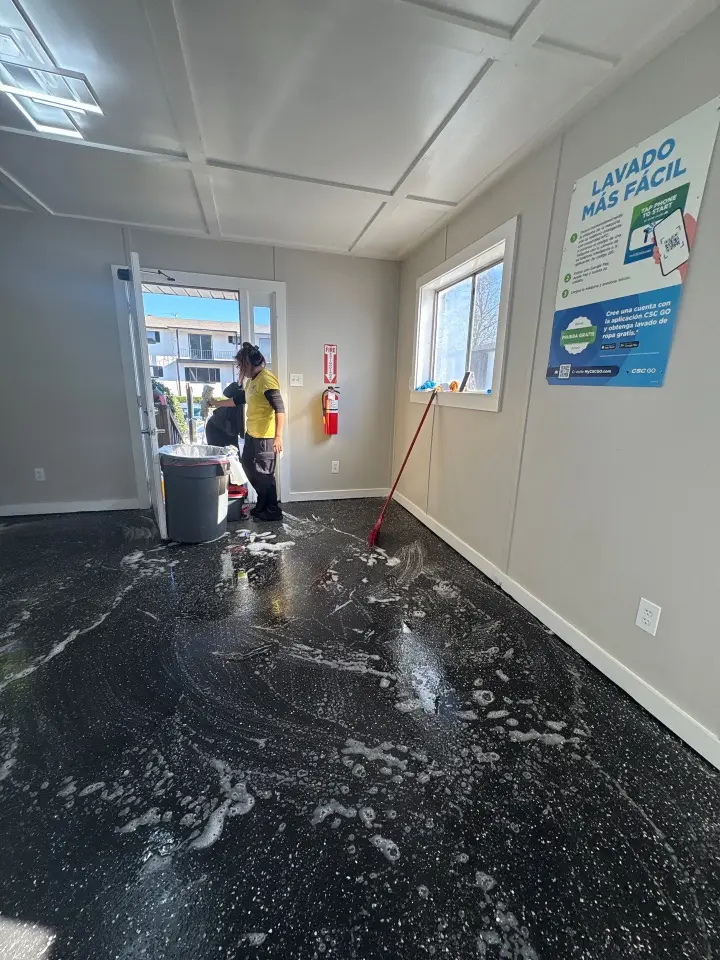
For Huntsville, Alabama businesses comparing cleaning providers, the terminology can be confusing. One quote may promise janitorial services, another commercial cleaning, and a third office cleaning. Rather than assume they represent three different service standards, compare what each company actually agrees to do, how often it will visit, and what remains outside the contract.
Janitorial versus commercial cleaning at a glance
| Question | Janitorial cleaning | Commercial cleaning |
|---|---|---|
| Main purpose | Maintain a facility during recurring visits | Cover recurring and specialized business cleaning |
| Typical tasks | Trash, restrooms, floors, breakrooms, touchpoints | The same work, plus optional deep or technical tasks |
| Scheduling | Daily, nightly or several times a week | Recurring, one-time, seasonal or project-based |
| Equipment | Standard commercial tools and approved products | May also involve extractors, scrubbers or specialized access |
| Buying decision | Who keeps the building clean every week? | What cleaning outcome does this property need? |
This table describes common industry usage, not a legal distinction. A janitorial contractor may have equipment for specialty floor care, and a commercial cleaner may do nothing but routine office maintenance. Ask vendors to clarify the tasks and exclusions, because company names do not establish competence, insurance or regulatory compliance.
What do janitorial services usually include?
Routine janitorial services frequently cover designated waste bins, accessible floors, restrooms, shared counters, breakroom surfaces, entrance areas and approved high-touch points. On a scheduled visit, the team may vacuum carpets, damp mop hard floors, clean sinks and fixtures, check supplies, wipe cleared tables, and leave a completion report. Some contracts include consumable restocking, while the business purchases the supplies separately.
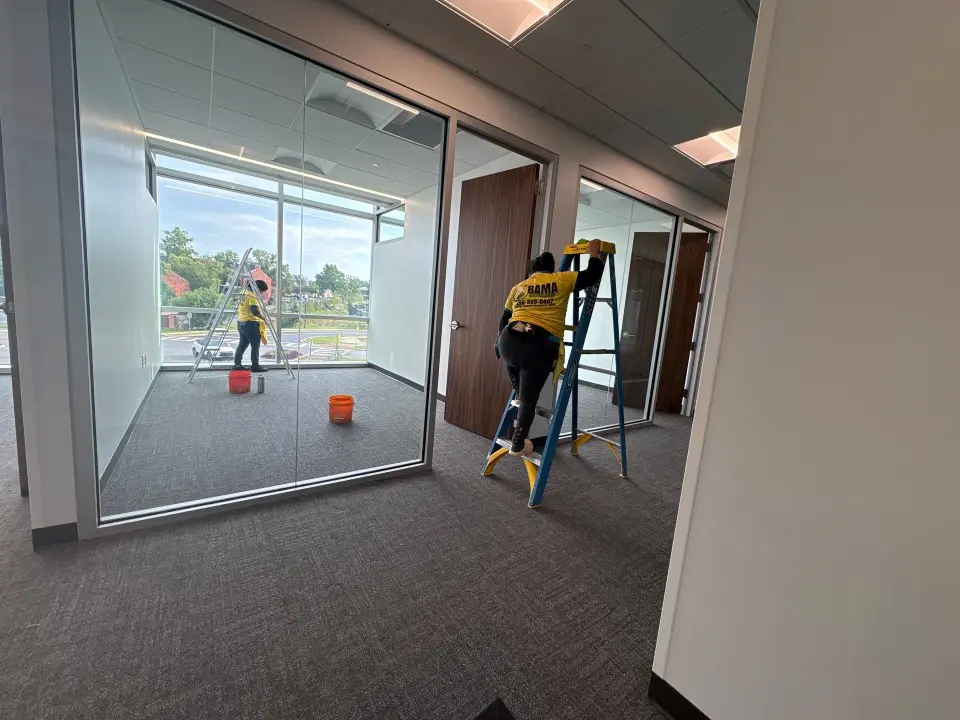
Janitorial work can happen before opening, after closing, or during business hours. A daytime porter differs from a nightly crew: the porter responds to current traffic and unexpected messes, while the nightly crew has time to complete a planned reset. If the building has high lobby traffic and frequent restroom use, it may need both functions. The nightly cleaning versus day porter comparison examines that decision specifically.
What else can commercial cleaning cover?
Commercial cleaning can encompass recurring janitorial tasks, one-time deep cleaning, periodic hard-floor maintenance, carpet extraction, interior or exterior glass, high dusting, and cleanup after renovation or construction. Each project needs a separate assessment of surfaces, occupancy, access, equipment and disposal requirements. An office that needs weekly vacuuming is a different job from a warehouse with overhead dust, a medical practice with special infection-prevention protocols, or a restaurant kitchen.
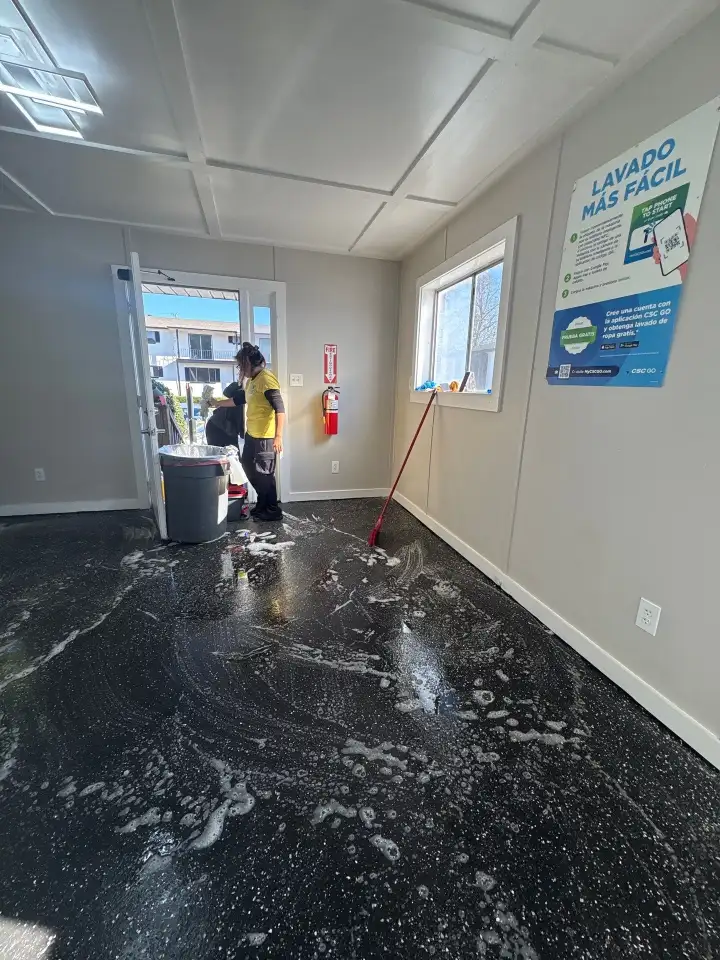
Do not assume that offering “commercial cleaning” means a provider is automatically qualified for every specialized task. Medical, food-preparation, hazardous-material and some industrial settings have distinct requirements. Ask about the precise cleaning method, training, safety documents and any task-specific insurance. A regular office team should not be asked to improvise a biohazard cleanup or work around energized machinery outside its approved scope.
Is office cleaning the same as janitorial service?
Office cleaning is a setting, and janitorial service is often the recurring maintenance model. They overlap substantially. A Huntsville engineering firm may hire a janitorial crew to maintain conference rooms and restrooms after hours, and call the same service “office cleaning” when requesting a quote. The Huntsville office-cleaning service page describes the property-specific service. Neither term guarantees a particular number of weekly visits or the inclusion of carpet shampooing.
It is also useful to separate cleaning from disinfecting. Routine surface cleaning removes soil and reduces germs, while disinfection uses an approved product to kill specified microorganisms under label conditions. According to the CDC, regular cleaning is enough in many ordinary community-facility situations; additional disinfection is appropriate in certain circumstances, such as areas where people have obviously been ill. Advertising “commercial disinfection” should not be treated as proof that every surface needs chemical treatment every night.
Which service should a small business hire?
If a facility needs restrooms, waste bins, breakrooms and floors maintained on a predictable schedule, a recurring janitorial or office-cleaning contract is usually the logical starting point. If it has an unusual backlog of dirt or needs a machine-cleaning project, ask for a separate commercial deep-cleaning quote. Some businesses purchase an initial detailed cleanup followed by a simpler recurring plan. That avoids paying project-level rates for work that is not needed every week.
Consider a 3,000-square-foot professional suite with a few employees and no visitors. It may be adequately served by limited weekly visits plus responsible onsite care between visits. A retail store of the same size, with public entry doors and heavy restroom use, may need cleaning every business day. Neither example implies that one type of company is superior; building conditions determine the service.
A practical example for Huntsville and North Alabama
Illustrative example: A midsize office has a lobby, two conference rooms, thirty desks, two restrooms and a breakroom. Its routine contract covers waste, accessible vacuuming, restroom cleaning, approved touchpoints and breakroom counters on three evenings per week. Once a quarter, the facilities manager assesses carpet wear and decides whether extraction is needed. That quarterly project is separately approved rather than hidden inside the recurring checklist.
A second property—a customer-facing fitness center—may need multiple restroom checks during open hours and more intensive after-close work. A routine janitorial crew can still provide both services if the contract has sufficient coverage. The right question is not “janitorial or commercial?” but “which surfaces, frequencies and response times does our operation require?” The guide to office-cleaning frequency helps decide the number of visits.
How does pricing differ between janitorial and commercial cleaning?
Recurring contracts are commonly built around the number of visits, expected labor time, floor and fixture workload, supplies, access restrictions and agreed tasks. A one-time specialty job may be priced around labor, equipment, setup, materials and site conditions. Because “commercial cleaning” includes both models, there is no reliable rule that one term always costs more than the other. Compare two proposals only after checking the same task list and frequency.
For example, a quote with nightly restroom cleaning and trash collection is not directly comparable to another that also includes periodic extraction and high dusting. Ask which items are included, optional or expressly excluded, and whether changes require authorization. For a broader budgeting explanation, consult the commercial office cleaning cost guide. Prices should be confirmed through a property walk-through rather than inferred from a single broad label.
What should you ask before hiring either type of provider?
Ask who supplies chemicals, liners and paper products; whether the cleaner may enter locked rooms; how missed work is reported; what happens when a normal visit falls on a holiday; and how specialty tasks are approved. Confirm insurance, access controls, employee training and who supervises the account. Check whether the proposal covers window interiors, exterior glass, carpet extraction, floor finish maintenance and moving furniture. Each can be an expensive misunderstanding if left implicit.
You should also ask for a written process to report spills, property damage, access failures and maintenance issues. A good provider will not promise that every building needs the same frequency. It should be able to explain why an occupied restroom is cleaned more often than an unused storage closet, or why a delicate floor finish requires a specific method instead of an aggressive chemical.
Should you hire in-house staff or outsource the cleaning?
That is a separate decision from the definition of janitorial versus commercial cleaning. An in-house team can be directly supervised and may be convenient for daytime response, but the employer must manage staffing, coverage, tools and training. Outsourced services can simplify scheduling and supervision, but the contract needs clear quality controls and communication. Read the in-house versus outsourced janitorial guide for that comparison; do not confuse it with the type of cleaning tasks required.
Final answer: focus on the work, not the terminology
Janitorial cleaning is commonly the recurring part of a business cleaning program; commercial cleaning is the broader category that may include janitorial and specialty projects. Both can be appropriate for an office, school, shop or other property. Choose by task, frequency, surfaces, safety requirements and quality expectations, and insist that the written scope matches what the sales conversation promised.
For ordinary offices, consult the CDC facility cleaning guidance when distinguishing normal cleaning from disinfection. The guidance does not replace rules for healthcare, food handling or other regulated operations.