Office Cleaning · Practical Scheduling Guide
Daily vs Weekly Office Cleaning Tasks: What Should Be Done and When?
Daily office cleaning should cover tasks that cannot safely or practically wait: used restrooms, trash, food spills, shared counters, and frequently touched surfaces. Weekly office cleaning can handle lower-use areas, more detailed dusting, floor edges, interior glass, and other tasks that do not become dirty every day. The exact schedule depends on occupancy, visitor traffic, and the condition of each area. A weekly professional cleaning visit does not eliminate the need for everyday restroom, waste, and breakroom upkeep.
The goal is not to make every surface spotless every day. It is to assign the right task to the right interval, name the person responsible, and make sure no important work falls between visits. This guide applies to ordinary offices in Huntsville and North Alabama, not medical treatment areas, commercial kitchens, or other workplaces with specialized cleaning requirements.
What Is the Difference Between Daily and Weekly Office Cleaning Tasks?
The difference is how quickly a task becomes necessary again. Daily tasks deal with active use, hygiene, food residue, waste, and visible mess. Weekly tasks generally address slower dust buildup and presentation details. The same office may need both, regardless of whether it hires a professional cleaner every weekday or once a week.
This is a task schedule, not a recommendation that every business should purchase daily service. For deciding how often a contractor should visit, see the separate guide to professional office cleaning frequency.
Daily vs Weekly Office Cleaning Checklist
Use this comparison as a starting checklist, then adjust it to what actually happens in your building. “Daily” means each occupied workday, with additional attention whenever a spill or visible mess occurs.
| Office area | Daily attention | Weekly attention |
|---|---|---|
| Restrooms | Inspect, clean used fixtures, replenish supplies, remove waste, and address soiling | Detail partitions, less-touched surfaces, edges, and accumulated marks |
| Breakroom | Remove food waste; clean spills, sinks, shared counters, and frequently used handles | Detail cabinet fronts, splashbacks, appliance exteriors, and accessible edges |
| Desks and meeting rooms | Wipe shared tables and visibly soiled approved surfaces | Dust accessible low-touch ledges, shelves, and chair components |
| Entrances and reception | Remove debris; clean busy touchpoints and visible marks | Detail interior glass, frames, display surfaces, and corners |
| Floors | Spot-clean spills and traffic paths as needed | Vacuum or mop less-used zones and detail edges according to the floor type |
| Waste and recycling | Empty bins containing food or other waste likely to cause odor | Check low-use bins, clean bin exteriors, and inspect collection points |
Important distinction: Some offices need full floor cleaning, restroom service, or high-touch cleaning more than once a day. Others can rotate certain tasks less often. A weekly column is not permission to leave visibly dirty or unsafe conditions unattended.
Which Office Cleaning Tasks Should Be Done Every Workday?
Keep restrooms usable and stocked
Restrooms deserve priority because they combine frequent use, moisture, waste, and shared fixtures. Check toilets, sinks, faucets, dispensers, door hardware, and floors. Refill soap and paper products before they run out. In a busy office, a midday check can be more useful than assuming one end-of-day visit solves everything.
Deal with food, trash, and spills promptly
Breakroom counters, sinks, appliance handles, and tables may need cleaning after active use. Remove food waste and clean spills promptly so odor, pests, or slippery surfaces do not become the next day’s problem. A lightly used desk-side paper bin can have a different emptying schedule from a lunchroom trash can.
Prioritize shared contact points
Door handles, reception counters, shared tables, light switches, and commonly used equipment should be reviewed against how many people touch them. Employees’ personal keyboards and sensitive devices require permission and manufacturer-safe methods. The existing office high-touch cleaning checklist covers the surface-level details; this article focuses on where those tasks belong in the daily schedule.
Which Office Cleaning Tasks Can Usually Wait Until Weekly?
Tasks that involve low-touch, low-soil surfaces often fit a weekly rotation. Examples include dusting accessible ledges, cleaning marks from doors and partitions, wiping chair bases, detailing baseboards, and reaching floor edges not covered during routine traffic-path cleaning. These are not automatically required every Friday; the correct interval is determined by visible condition and use.
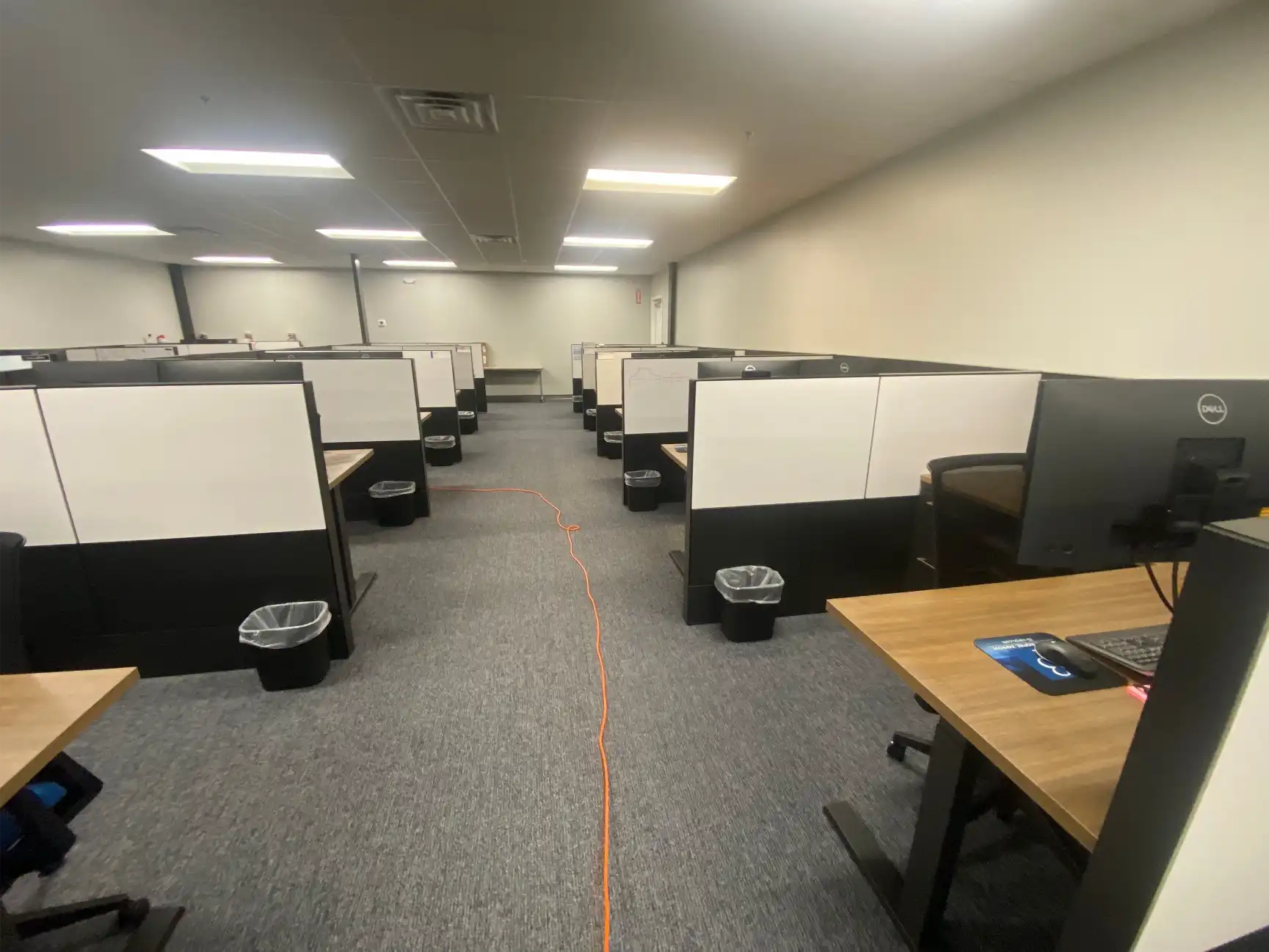
Weekly work is also a good time to check what daily cleaning has missed. If debris is collecting under shared tables, corners are getting dusty, or floor edges look neglected, add those locations to a recurring detailed task rather than hoping an occasional major clean will correct them.
Weekly detail work is not necessarily a deep clean. A deep clean is a different scope intended to address accumulated soil and areas beyond normal routine coverage. See the explanation of regular office cleaning versus deep cleaning before adding those services to a contract.
If a Cleaner Comes Weekly, Who Handles Daily Cleaning?
Someone still needs to handle everyday conditions. A one-visit-per-week contract may be perfectly reasonable for a small, lightly used office, but it cannot reset a shared restroom or remove a food spill on days when the cleaner is not there.
There are three workable approaches: assign simple upkeep to an office employee who agrees to those duties; engage a daytime porter or building staff member for shared areas; or add short cleaning visits for the specific rooms that need them. The right choice depends on staffing, risk, service expectations, and who has access to the building.
Write responsibilities down. For example, an office administrator might report supply shortages and handle simple paper-bin changes, while a trained cleaner handles restroom cleaning and chemical products. Staff should not be expected to use unfamiliar chemicals or handle potentially hazardous waste without suitable training and protective procedures.
Sample Five-Day Cleaning Schedule for a Small Office
Illustrative example, not a mandatory industry standard: Imagine a non-medical Huntsville office with about 15 employees, one shared restroom, a breakroom, carpeted workstations, and a Monday-to-Friday workweek. The daily baseline might include restroom checks, food waste, spill response, and shared counters. Weekly detail tasks could be spread across the week instead of performed all at once.
| Day | Daily baseline | Suggested rotating detail |
|---|---|---|
| Monday | Restroom, waste, breakroom, spills and shared touchpoints | Dust accessible shelving and low-touch ledges |
| Tuesday | Same daily baseline | Clean interior glass and door marks |
| Wednesday | Same daily baseline | Vacuum carpet edges and furniture-adjacent areas |
| Thursday | Same daily baseline | Detail chair bases and accessible furniture edges |
| Friday | Same daily baseline | Inspect supplies, waste stations and missed areas |
This example separates the frequency of tasks from the frequency of contractor visits. A professional crew could complete several rotating tasks in one weekly visit, while building staff cover daily upkeep. Another workplace may prefer five evening visits. Both arrangements can work if the responsibilities, cleaning methods, and condition standards are clear.
How Should the Checklist Change for Busy, Hybrid, or Client-Facing Offices?
Hybrid offices: Schedule cleaning around actual occupied days, not the number of desks on a floor plan. If most employees attend on Tuesday and Thursday, the next-day condition of shared meeting rooms may matter more than low-use private rooms.
Busy reception and customer-facing offices: Give entrances, door hardware, visitor restrooms, and visibly dirty floors more attention. Presentation standards can justify additional cleaning even when the infection-control need is not exceptional.
Offices with meals and shared kitchens: Food waste and spills are poor candidates for a weekly-only schedule. Make everyday upkeep explicit in the plan.
Medical, dental, laboratory, and food-production settings: Do not adopt this ordinary-office checklist unchanged. Those facilities may have separate regulations, infection prevention procedures, or sanitation requirements.
Does Daily Office Cleaning Mean Daily Disinfection?
No. Cleaning removes dirt and many germs from a surface, while disinfection uses appropriate chemicals to kill targeted germs. According to the CDC’s guidance for community facilities, high-touch surfaces should be cleaned regularly, other surfaces should be cleaned when visibly dirty, and disinfection is especially relevant where people have clearly been ill or other risk factors apply. The CDC guidance is not intended to replace requirements for healthcare settings.
Do not automatically disinfect every desk, carpet, or floor each day. If disinfection is needed, select a product approved for the target use and surface. The EPA explains that disinfectant labels specify use sites and contact times, including how long a surface must remain wet. Never mix cleaning chemicals, and check surface compatibility before use.

How Can You Tell Whether Your Daily and Weekly Task Plan Is Working?
Test the plan over two occupied workweeks as a practical trial period, not a scientifically validated benchmark. Keep a simple log of repeat complaints, overflowing bins, restroom supply shortages, visible dust, spills, and missed areas. Record the location and when the problem appeared, rather than simply writing “office was dirty.”
If the same issue returns before the next scheduled visit, move that task to a higher frequency. If a low-use room repeatedly stays clean, you may be able to reduce detail work there. Review the plan again after a staffing change, a seasonal increase in visitors, or a layout change. The aim is a reliable standard, not the greatest possible number of cleaning visits.
If you are hiring a contractor, specify which areas are checked every visit, which are weekly extras, who provides consumables, who responds to unexpected spills, and how issues are reported. Mid City Commercial Cleaning’s Huntsville office cleaning service overview provides context for discussing a plan, while the task matrix above helps you describe what you need without purchasing unnecessary work.
Frequently Asked Questions
What should be cleaned every day in an office?
Prioritize used restrooms, shared food areas, waste that may cause odors, visible spills, and commonly touched surfaces. Add floor cleaning or more frequent restroom checks where traffic and conditions justify them.
What office cleaning can be done once a week?
Lower-touch dusting, detail work along floor edges, interior glass marks, and low-use areas are often suitable for a weekly rotation, provided the surfaces do not become visibly dirty sooner.
Can a small office use weekly professional cleaners?
Yes, when occupancy is light and someone is responsible for daily restroom, food-waste, and spill-related tasks. Weekly visits are not sufficient if essential maintenance is ignored between visits.
Should office carpets be vacuumed daily or weekly?
Choose frequency by actual foot traffic, visible soil, and the floor’s condition. Entrances and busy corridors may need attention more frequently than quiet office corners. Spills and tracked-in debris should not wait for a weekly appointment.
Does office cleaning have to happen after business hours?
No. Some teams clean before opening, after closing, or during business hours. The better time is the one that allows safe access and causes the least disruption while still handling tasks when they are needed.
A Cleaning Plan Built Around How Your Office Is Used
For a typical office in Huntsville or North Alabama, the most useful starting point is a written daily-and-weekly task list. Mid City Commercial Cleaning can discuss which tasks belong in the professional scope and which need attention between visits.
Discuss an office cleaning planSources and Approach
This article combines publicly available community-setting cleaning guidance with a practical office-task framework. It is not a claim that every office needs the same visit schedule or that the illustrative five-day rotation is required by law.
- Centers for Disease Control and Prevention, When and How to Clean and Disinfect a Facility (April 16, 2024), linked above.
- U.S. Environmental Protection Agency, Selected EPA-Registered Disinfectants, linked above.